Chinese Egret, Dapeng Bay, April 19th

Poor digiscoped record shot of two of the four Chinese Egrets present at Dapeng Bay on April 19th. The bird on the right is a Little Egret.

Poor digiscoped record shot of two of the four Chinese Egrets present at Dapeng Bay on April 19th. The bird on the right is a Little Egret.

I started late on Saturday, and had no clear plan for the day except to drive into Pingtung County and perhaps locate the Inda Eco-Farm, which is mentioned in some trip reports as being the best site in Taiwan for Black-naped Oriole.

Once over the huge Gaopeng Bridge, I drove north for a couple of kilometers to my usual wader spot on the east bank of the river. It’s not a particularly scenic place, and there was plenty of industrial activity today with trucks rumbling back and forth. Still, waders on the river included a Sharp-tailed Sandpiper and a Marsh Sandpiper, alongside about 15 Wood Sandpipers and a handful of Common Greenshank, Common Sandpiper, Black-winged Stilt and Little Ringed Plover.

There followed a brief and fruitless search for the Inda Eco-Farm along the Wanluan Township section of route 185. I will have to do more research to locate this place, but there isn’t much information about it on the internet in English.

I decided to continue south, and call in at Dapeng Bay on my way back to Kaohsiung. It turned out to be a great decision. Mudflats at the north-east corner of the bay held plenty of waders, many of which were in their smart summer plumage. Perhaps 300 Pacific Golden Plovers were accompanied on the mud by 3 Grey-tailed Tattlers (Taiwan tick), 3 Ruddy Turnstones (Taiwan tick), 9 Curlew Sandpipers, 10 or so Mongolian Plovers, a Sharp-tailed Sandpiper, 5 Red-necked Stints, and a handful of other common waders.

Nearby, two smart Black-headed Gulls were also new for me in Taiwan. But the stars of the show were no fewer than 4 summer-plumaged Chinese Egrets that rested on the mud for 30 minutes before flying off north. These birds were very distinctive with their almost comically long head-plumes blowing in the breeze, and vivid bright yellow-orange bills. There remain just 2,600 – 3,400 individuals of this sought-after East Asian endemic species, which is a rare migrant through Taiwan en route to its breeding grounds in Korea. It’s not a new bird for me (I’ve seen them in Thailand in winter), but a stunning and unexpected addition to my Taiwan list.

Chinese Egret, Black-headed Gull, Grey-tailed Tattler, and Ruddy Turnstone bring my Taiwan list to 209 and my year list to 173.

Taiwan Hwamei, Oriental Cuckoo and Oriental Pratincole, Kaohsiung area, April 17th

Oriental Cuckoo, Yuanfugang Wetlands Park, April 17th.

Oriental Cuckoo, Yuanfugang Wetlands Park, April 17th.

Oriental Cuckoo, Yuanfugang Wetlands Park, April 17th.

Today I figured that it was about time to get the Taiwan Hwamei onto the year list. This is an endemic species that most visiting birders see in the car park of the Longluan Lake Nature Center near Kenting; however, I have yet to encounter it there despite many visits.

My reliable site for Taiwan Hwamei is at Shoushan (Monkey Mountain), a mere 10-minute drive from my house. I parked near the zoo and walked up the wide approach road, which is flanked by mature trees and is a reliable spot for Taiwan Barbet. The best area for Taiwan Hwamei, in my experience, is the area around the start of the trailhead and the first 200 meters or so of the trail to the Emerald Pavilion.

This is a skulking species that is easiest to see when singing; unfortunately, none were singing today, and even if they had been, there’s a good chance they would have been drowned out by the chorus of loud voices and radios from the many hikers in the area this morning.

Undeterred, I walked the first section of the Emerald Pavilion trail, which passes the zoo’s peacock enclosure. Shortly afterwards, on the right, I heard some scraping in the leaves, and it was relatively straightforward to get decent views of a pair of Taiwan Hwameis (they seem fairly used to people here).

Alert to the possibility of Chinese Hwamei, or hybrids, I studied each bird carefully. Neither had any sign of an “eyebrow”, and each bird had a lovely golden-brown crown and nape consistent with pure Taiwan Hwamei.

With the Hwamei safely onto the year list, I headed north to Yuanfugang Wetlands Park. The most notable bird here was an excellent Oriental Cuckoo, which showed very well in small trees along the eastern end of the mangrove reserve. The bird was clearly a migrant and was therefore silent; separation on plumage and size of this lone bird from the almost identical (and some would say, dubiously split) Himalayan Cuckoo was impossible. I was happy to call this coastal migrant an Oriental, on the premise that locally breeding “Himalayans” probably head straight to their breeding grounds in mountain forests upon making landfall in Taiwan.

Also of note, my first Oriental Pratincole of the spring, which flew overhead while I was watching the cuckoo. The small wetland next to the factory had only one Pheasant-tailed Jacana today, but 9 Garganey (including 5 drakes) was my highest count for this site.

Taiwan Hwamei, Oriental Cuckoo and Oriental Pratincole bring my year list to 169 species.

TAIWAN HILL PARTRIDGE, Tengjhih National Forest, April 15th

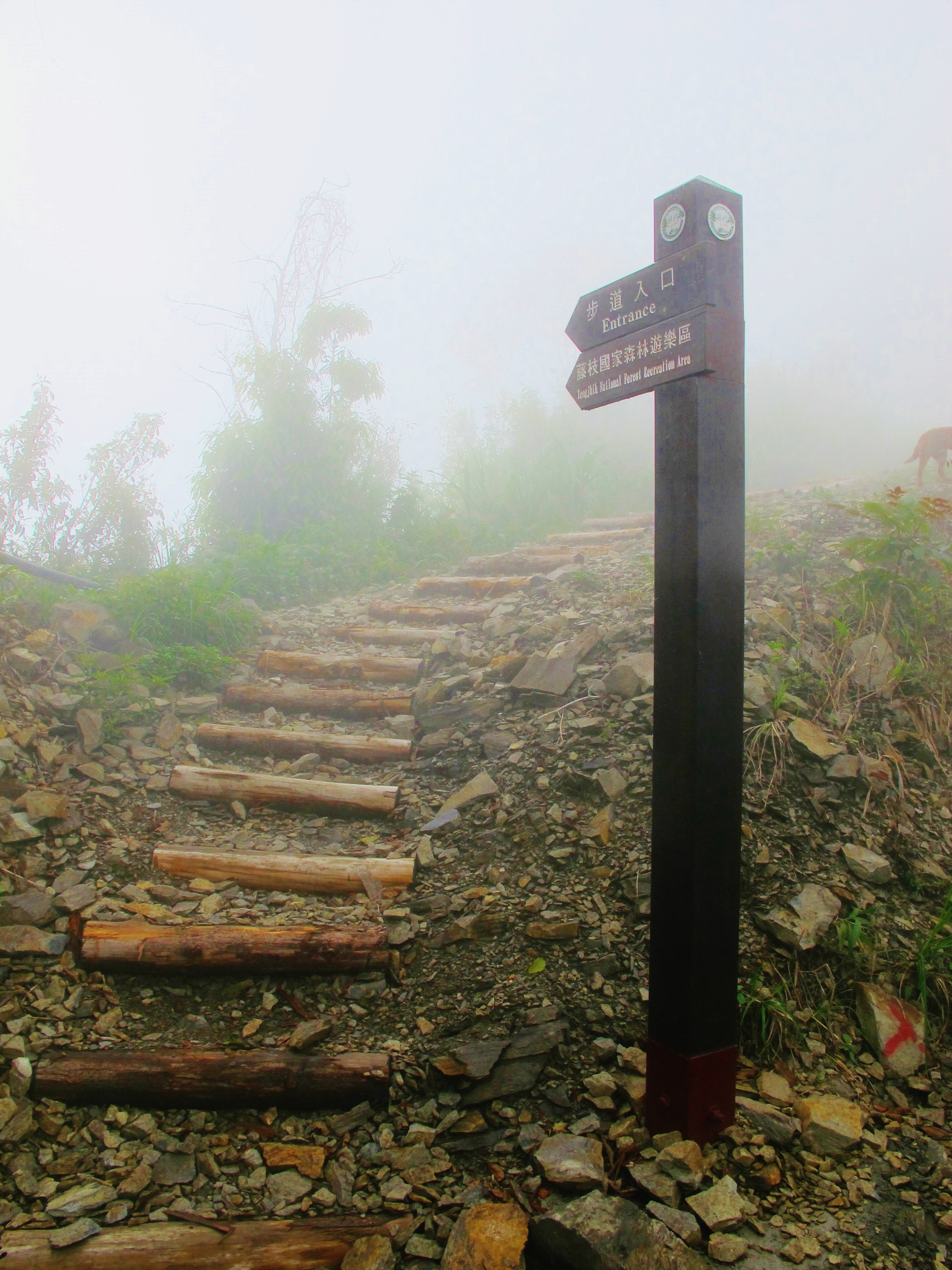
The start of the trail to Tengjhih National Forest, in the fog.

The start of the trail to Tengjhih National Forest, in the fog.

A cool, foggy and drizzly day in the mountains at Tengjhih, but a red-letter day for me because I finally connected with Taiwan Hill Partridge. This bird is generally considered to be the most difficult Taiwan endemic to see. It is scarce and secretive, and spends its time on the ground in the interior of mountain forests, where dull lighting and its cryptic camouflage make it very hard to spot.

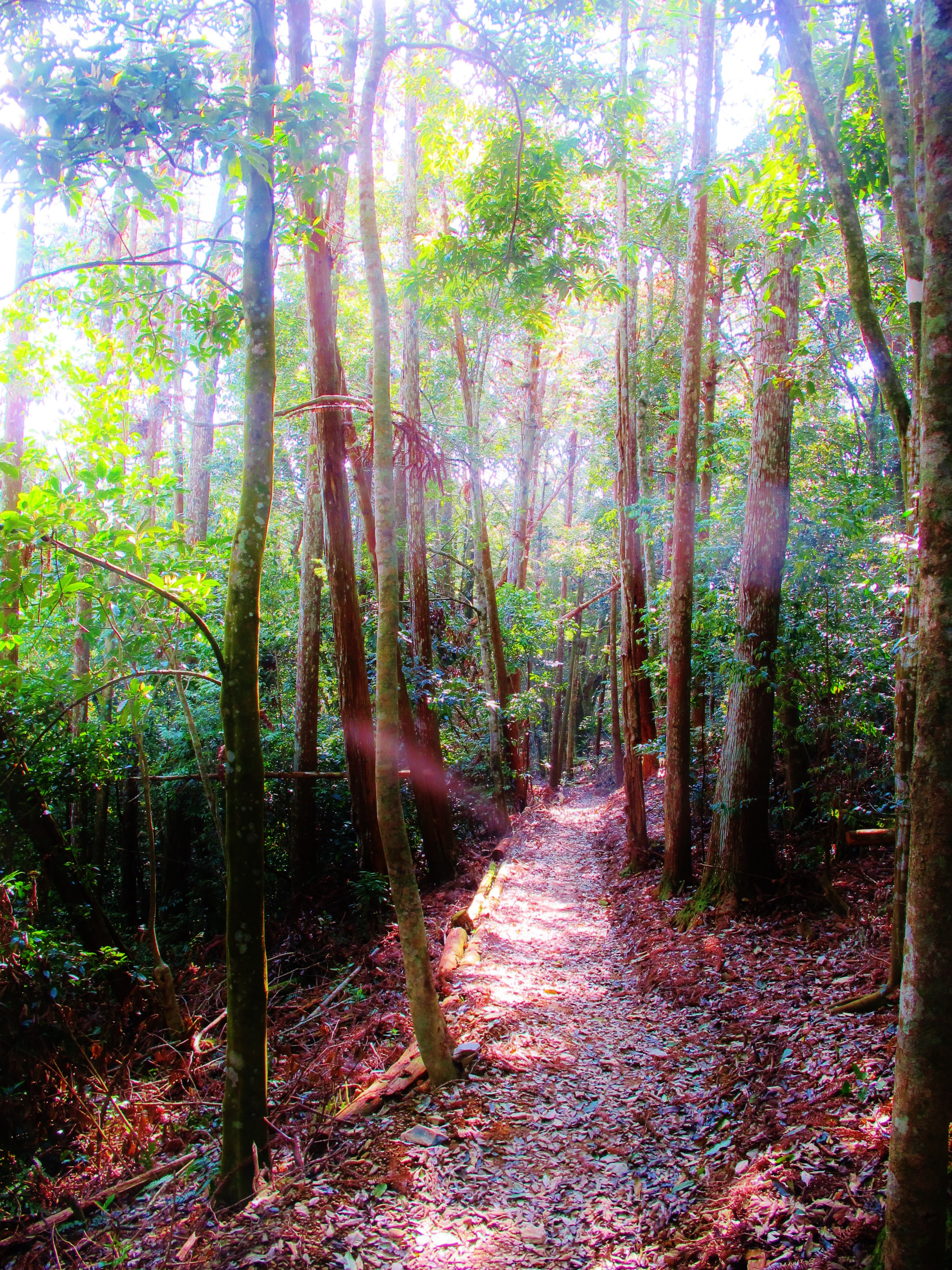
The interior of the forest along the trail to the Tengjhih entrance was very gloomy in the fog today, making viewing conditions challenging, but on the plus side there was not a breath of wind. Therefore it was easy to hear and locate bird calls and movements. Close to the 425 meter marker (distances along the trail are marked by red painted numbers on rocks and logs), I flushed two birds from forest on the left of the trail which – from their size and shape – were almost certainly Taiwan Hill Partridges, but the merest glimpse was not enough to confirm. Frustrating. However, just two minutes and twenty meters further along, I heard scraping sounds coming from the leaves, this time to the right of the trail. Careful stalking finally produced reasonable views of not one, but two Taiwan Hill Partridges feeding quietly on the ground.

Elated with this sighting, I continued along the trail as far as Tengjhih village, seeing two Eurasian Nuthatches (year tick) as well as many of the same species seen last week.

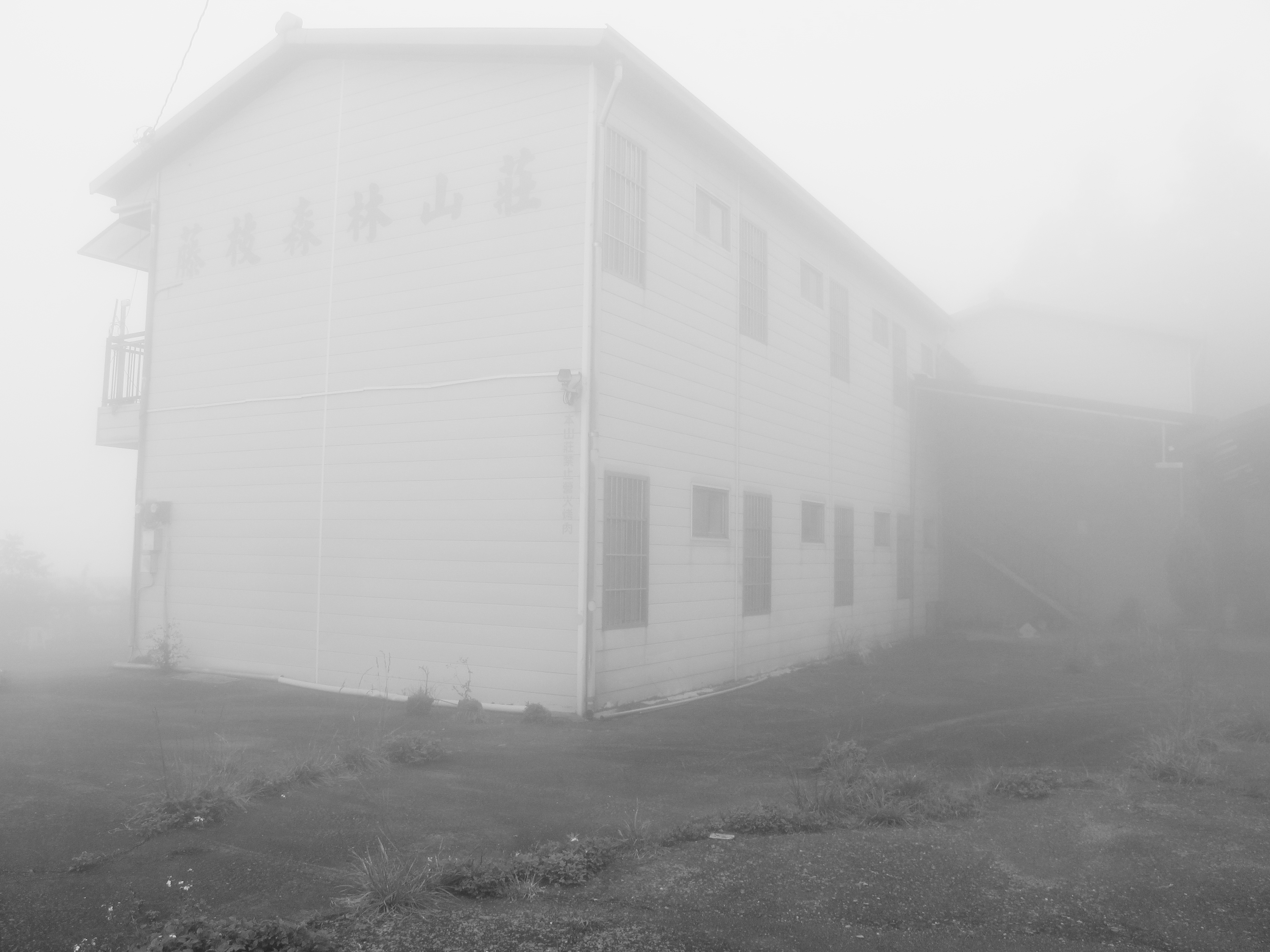
Deserted hotel in the ruins of Tengjhih village - a creepy place in the fog.

Deserted hotel in the ruins of Tengjhih village – a creepy place in the fog.

Returning along the same trail, I once again heard scraping sounds coming from the forest understorey at exactly the same point I had flushed the suspected Taiwan Hill Partridges on my outward journey. I quietly crept closer, and not only did I see a Taiwan Hill Partridge, I even managed to get a few seconds of video of it feeding then looking directly at me before it ran off into the forest. So it looks like there were two separate pairs of birds feeding by the trail in that area. It’s also very close to the spot where I heard Taiwan Hill Partridge calling on my visit last week.

By this time, I was keen to head down from the mountains out of the fog and drizzle, so I drove south along the 27 then the 185 towards Sandimen to check out Saijia Recreation Area, a site that I’d noticed several times recently while driving past and thought warranted a look.

It’s mainly a campsite and aviation park (for hang-gliding and paragliding). There’s also a grass ski slope and – this is what caught my eye – some open parkland with tall mature trees.

The two birds I had in mind were Collared Owlet and Black-naped Oriole, two species which might be found in such habitats in southern Taiwan. I had no luck with either, but I did get great views of a male Maroon Oriole. I also flushed a Malayan Night Heron, which flew into a nearby tree and peered accusingly at me from a low branch:

Malayan Night Heron, Saijia Recreation Area, April 15th.

Malayan Night Heron, Saijia Recreation Area, April 15th.

Taiwan Hill Partridge brings my life list to 1,771 and my all-time Taiwan list to 204. The partridge and Eurasian Nuthatch increase my 2014 Taiwan year list to 166 (I also added Pacific Reef Heron in Kenting last weekend).

Cheting Marshes and Yuanfugang Wetlands Park, April 13th

Cheting Marshes wader lagoon, with Great Egrets visible on the left.

Cheting Marshes wader lagoon, with Great Egrets visible on the left.

Highlights (Cheting):

  • Greater Sandplover 1
  • Red-necked Stint 4
  • Avocet 15
  • Pacific Golden Plover 21
  • Richard’s Pipit 1

Highlights (Yuanfugang):

  • Sacred Ibis 3
  • Pheasant-tailed Jacana 6
  • Garganey 3
  • Eurasian Coot 1
  • Yellow Bittern 1
  • Wood Sandpiper 1

A brief Sunday morning visit to these wetland sites, which are both easily accessible from Highway 17, north of Kaohsiung.

It was a hot, clear day. The main lagoon at Cheting was fairly quiet, with just 15 Avocets, a lingering Greater Sandplover (probably one of the two birds that have been present for several weeks), and a nice flock of 21 Pacific Golden Plovers that dropped in shortly after I arrived. Some of them were already in full summer plumage. The “photographers lagoon” had 4 Red-necked Stints, which flew off high to the south, and plenty of common waders (Black-winged Stilt, Common Greenshank and Marsh Sandpiper) distantly visible through the heat haze.

Next, I explored some minor roads at the back (north) of the Cheting site. The dried-out marshland produced a single Richard’s Pipit, and plenty of common birds in the grassland and around the scruffy fishponds.

Pacific Golden Plovers at Cheting Marshes, April 13th.

Pacific Golden Plovers, Cheting Marshes, April 13th.

Finally, I squeezed in a 20-minute trip to Yuanfugang Wetlands Park on my way back to Kaohsiung. A quick glance at the main ponds produced some of the specialities of the area: 3 Sacred Ibis, 6 Pheasant-tailed Jacana (mostly in their splendid summer plumage), 3 Garganey, a Eurasian Coot (uncommon in Taiwan), plus single Yellow Bittern and Wood Sandpiper.

Pacific Swallows, Cheting Marshes, April 13th.

Pacific Swallows, Cheting Marshes, April 13th.

Rusty Laughingthrush, Yellow Tit and Striated Prinia, Tengjhih National Forest, April 10th

Trail at Tengjhih National Forest.

Trail at Tengjhih National Forest.

Highlights:

  • Striated Prinia 1
  • Rusty Laughingthrush 1
  • Yellow Tit 1
  • Black Eagle 1
  • Crested Serpent Eagle 5
  • Besra 1
  • Crested Goshawk 2
  • Large-billed Crow 3
  • Eurasian Jay 1
  • Vivid Niltava 2
  • White-tailed Robin 2
  • Grey-cheeked Fulvetta 1
  • Rufous-faced Warbler many heard, few seen
  • Taiwan Sibia many heard, few seen
  • Steere’s Liocichla many heard, few seen
  • Collared Finchbill 1
  • Blue Rock Thrush 1
  • Black-faced Bunting 3
  • Taiwan Hill Partridge was heard calling repeatedly along the trail to Tengjhih National Forest HQ, but could not be seen.

Thursday morning, and I had to be at work in Kaohsiung at 1pm, but a very early start still allowed plenty of time for the 3.5-hour roundtrip drive to Tengjhih and a decent amount of time exploring the trails there.

My initial intention was to try a new site that I had read about, Shanping Arboretum, which lies a few kilometers south of Tengjhih, and like Tengjhih is signposted from Highway 27. The access road from the 27 is somewhat rough in places, and passes through a barren area of scree in what must have been a quite spectacular landslide. Unfortunately, I was turned back after about 3km at the mountain police station. I was not allowed to proceed any further – whether this was because the Shanping Arboretum is closed today, or I was too early, or is never open, was not clear to me. Anyway, I hadn’t wasted much time, so I immediately headed north to Tengjhih.

The narrow road to Shanping Arboretum passed through the site of a huge landslide.

The narrow road to Shanping Arboretum passes through the site of a huge landslide.

I love driving the 18km-long mountain road up to Tengjhih. The early stages of the journey are marked by bright pink roadside flowers, and views down to the winding river far below. As the road climbs higher, any lingering remnants of Kaohsiung’s smog finally disappear, and I can breathe clean air again for a few hours.

Today I drove as far as I could go, to where the old road (and half of an unfortunate village) long ago plunged to the valley bottom in a huge landslide. As soon as I arrived, I heard an unfamiliar song from the low bushes that now grow out of the scree where the landslide took place. I had a pretty good idea about what it could be, and I crept closer and finally got excellent and prolonged views of a Striated Prinia. This is a rather unremarkable looking “little brown bird” of bushy areas, but one that until now had eluded me.

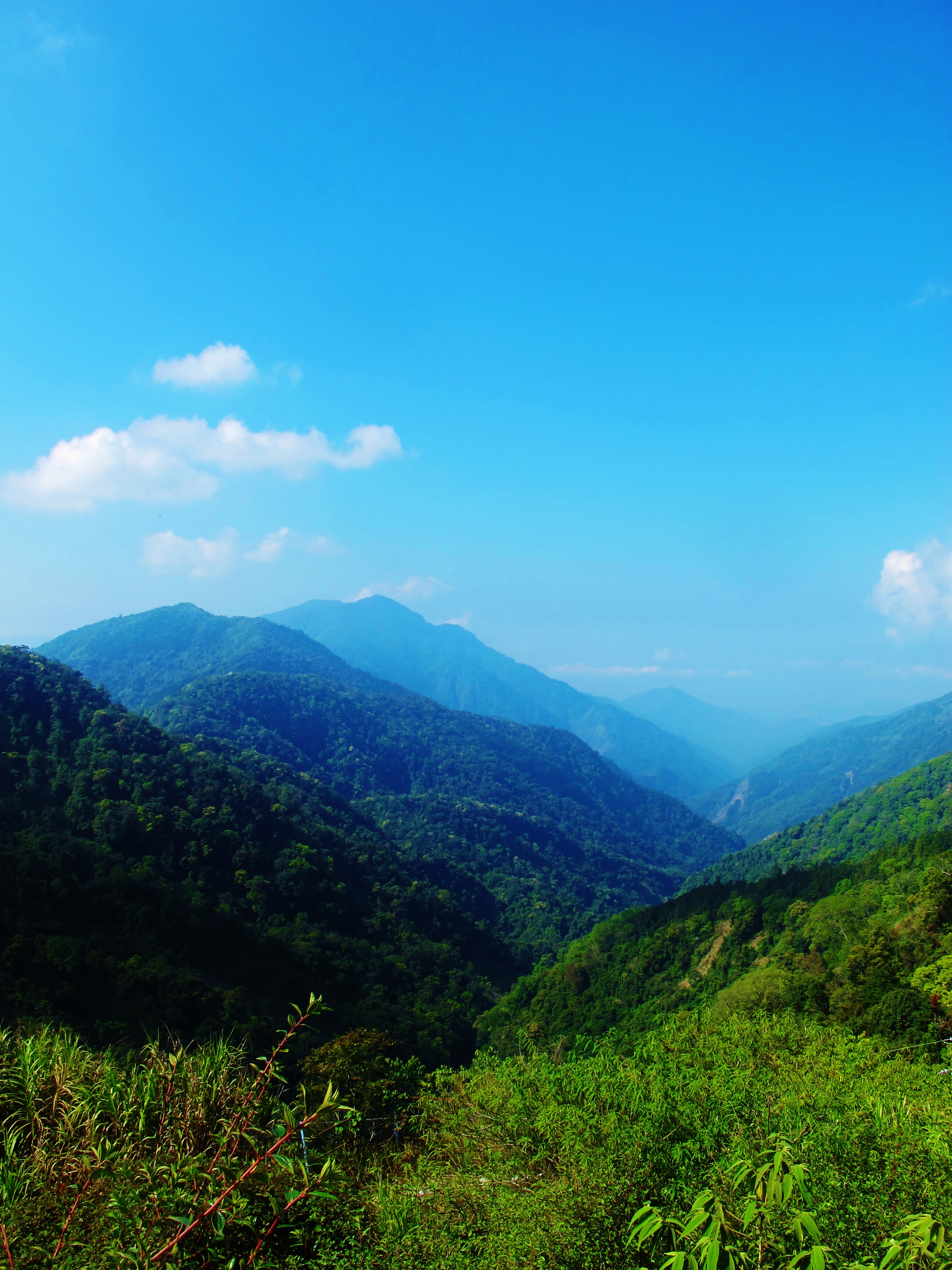
Tengjhih National Forest offers stunning views on a spring morning .... and it's less than two hours drive from Kaohsiung.

Tengjhih National Forest offers stunning views on a spring morning …. and it’s less than two hours drive from Kaohsiung.

Pleased to get a new bird under the belt, I walked up the steep, rough dirt road that now constitutes the only access to the formerly much-visited Tengjhih National Forest proper (in my posts, I refer to the whole area as Tengjhih, but the forest reserve itself is off-limits for the time being). The dirt road is impassable to normal cars and scooters, but you could drive it in a 4WD or dirt bike. I’ve only walked up this way a couple of times, mainly because the abandoned village (the other half of which plunged down the mountain during Typhoon Morakot in 2009) has a really spooky energy to it – in fact the last time I walked through the village, I unwittingly took some of that bad energy away with me which resulted in me crashing my motorcycle on the way back down the mountain.

However, today there was a better surprise in store …. a new trail (or at least, a newly signposted trail) on the left. Unlike other trails in the area, this one actually gets into the interior of some pretty good montane forest. It’s well-graded and about a mile long, following the ridge to the left of the road, and it eventually emerges at the entrance to the main area of Tengjhih National Forest, which is now (permanently?) closed due to the collapse of the access road.
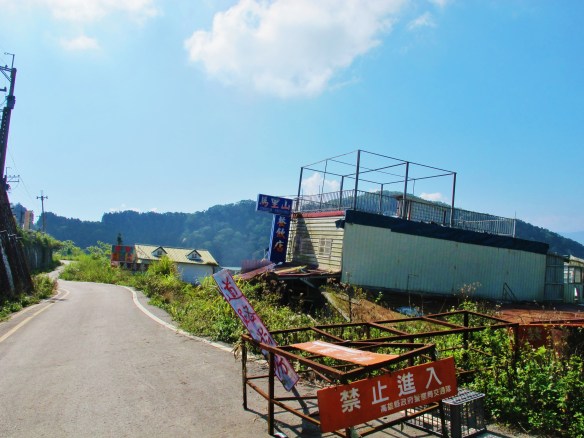
Deserted - and structurally unsound - building at the main entrance to Tengjhih National Forest. This small village is now accessible only by steep dirt track, after the original access road collapsed during Typhoon Morakot in 2009.

Deserted – and structurally unsound – building at the main entrance to Tengjhih National Forest. This small village is now accessible only by steep dirt track, after the original access road collapsed during Typhoon Morakot in 2009.

It’s hard to find birds in mature forest, especially in the tropics – you always hear a lot more than you see. One such bird today was a calling Taiwan Hill Partridge, one of the very few Taiwan endemic birds that I have yet to see. This one was calling repeatedly, not far from the path; I waited where I could see a long section of the trail, but it didn’t come out. Heard-only birds are not countable on my list, but the confirmed presence of the partridge here ensures that I will be coming back to this trail regularly until I see it.

Taiwan Sibias, Steere’s Liocichlas and Rufous-faced Warblers are obviously very common in here, judging from the number of them singing, but I only laid eyes on a few individuals of each species. One bird I did get good view of was a smart Yellow Tit, which is always a delight to see. Two White-tailed Robins and a pair of Vivid Niltavas also showed well. The best bird was awaiting me in scrub back near the start point of the trail – a beautiful Rusty Laughingthrush. I was surprised that this one was alone, watching me suspiciously from a low branch – all my previous experiences of this species have been of flocks.

Another nice bird was a Eurasian Jay, which came close enough to allow for some opportunistic photography.

Eurasian Jay, Tengjhih National Forest, April 10th.

Eurasian Jay, Tengjhih National Forest, April 10th.

Elsewhere in the general Tengjhih area, it was a good day for soaring raptors, including a beautiful Black Eagle at Km 14, and a Besra a little further down the road, plus the expected Crested Serpent Eagles and Crested Goshawks.

Striated Prinia brings my life list to 1,770, and my all-time Taiwan list to 203, while Striated Prinia plus Rusty Laughingthrush boost my 2014 Taiwan year list to 163 species.
Cheting Marshes and Sihcao, April 8th

Common Kingfisher, Cheting Marshes, April 8th

Common Kingfisher, Cheting Marshes, April 8th

Cheting Highlights:

  • Greater Sandplover 2
  • Avocet 62
  • Marsh Sandpiper 28
  • Black-faced Spoonbill 4
  • Garganey 2

Sihcao Highlights:

  • Dusky Warbler 1
  • Yellow-browed Warbler 1
  • Oriental Magpie-Robin 1
  • Red-necked Stint 5
  • Spotted Redshank 1
  • White-breasted Waterhen 1

I had never been to Sihcao – a well-known wetland just north of Tainan – and I thought I could just about squeeze it into a Tuesday morning before having to be back in Kaohsiung by 11.30am. Unfortunately, that didn’t give me a lot of time to look for birds in this large area of saltpans, fishponds, marshes, mangroves and coastal windbreak forest.

On the way, I stopped at the wader lagoon at Cheting Marshes. As usual, there were plenty of birds to be seen – including an excellent count of 62 Avocets. The two summer-plumaged Greater Sandplovers were still present. Nearby, a pair of Garganey were on the channel close to the photographer’s stakeout, and the usual Common Kingfisher showed very well on its usual branch. 4 late Black-faced Spoonbills flew over, heading north.

I started my Sihcao explorations by getting lost in the maze of small roads there. On a brief stop to scratch my head and wonder where the hell I was, I heard a Dusky Warbler calling from a bush growing out of the roof of an abandoned shed; patience and “pishing” resulted in great views as it came right out into the open.

The coastal windbreak forest at Sihcao looked promising for migrants, although birds would be hard to find in the huge area of trees, ponds and tangled vegetation. A Yellow-browed Warbler was calling from the trees, an Oriental Magpie-Robin hopped on the path in front of me, and I flushed a White-breasted Waterhen.

Wader-wise, a Spotted Redshank called loudly as it flew overhead, and the muddy margins of a drained fishpond held 5 Red-necked Stints.

Salt pans at Sihcao.

Salt pans at Sihcao.

I finally located the salt pan reserve, where there was virtually nothing of note. Unfortunately, time was very short by this stage, and I am sure deeper exploration of the area’s many wetlands and mangroves would have produced some interesting sightings.

No new birds for me today, keeping the total for the year at 161.

Yilan, April 4th-6th

The beach at Wai-ao, Yilan County.

The beach at Wai-ao, Yilan County.

A lovely 3-day weekend in the far north-east of Taiwan, as far from the madness of Kenting’s Spring Scream festival as it was possible to get – which suited me fine.

Not many birds were seen, but Peregrine (two sightings) and Western Osprey were both Taiwan ticks. Other raptors – Crested Serpent Eagle, Black-eared Kite, and Crested Goshawk – were sometimes seen circling above the hillside behind our beachfront accommodation in the small village of Wai-ao.

Cheting Marshes, April 2nd

Sharp-tailed Sandpipers, Cheting Marshes, April 2nd.

Sharp-tailed Sandpipers, Cheting Marshes, April 2nd.

Highlights:

  • Greater Sandplover 2
  • Sharp-tailed Sandpiper 8
  • Red-necked Stint 3
  • Spotted Redshank 2
  • Avocet 30

I took advantage of a break in the recently unsettled weather to head to Cheting for a couple of hours.

The lagoon at the far western end of the reserve, where a small minor road cuts the corner before rejoining the coastal Highway 17, is currently an awesome spot for viewing large flocks of waders. The place was literally teeming with birds, all easily viewed from the roadside at reasonable range.

Among hundreds of Black-winged Stilts, 50 or so Dunlin, plenty of Common Greenshanks and Marsh Sandpipers, there were 2 fine summer-plumaged Greater Sandplovers, 8 Sharp-tailed Sandpipers feeding close to the road, 3 Red-necked Stints and 2 Spotted Redshanks. Assuming the water level and disturbance level remain the same throughout the peak passage period of April and May – something which definitely cannot be taken for granted in this densely-populated area of Taiwan – it’s a good bet that many or even most of Taiwan’s migratory wader species will turn up here.

How I would love a breeding-plumaged Nordmann’s Greenshank to turn up, which – along with Little Curlew and a few of the elusive snipes – is one of the only waders to have appeared in East Asia that I still have yet to see. It’s a rare migrant in Taiwan so I won’t bank on it, but just to have the possibility of seeing one at this site is one of the things that keeps birding fresh and exciting.

On the way back to Kaohsiung, I stopped in for 5 minutes at Yongan Wetlands Park, where the water level has risen and a lot of the birds – including the wintering flock of Black-faced Spoonbills – have departed. 2 Yellow Bitterns, a Long-tailed Shrike and an Intermediate Egret were the best birds here.

Greater Sandplover and Sharp-tailed Sandpiper bring my all-time Taiwan list to the magic 200, and my year list to 159.

Birds of Taiwan Photos

Here are some of the bird photos I’ve managed to grab over the last year since I’ve been living in Taiwan. They are mainly opportunistic shots taken with my Canon G12, and as a result the quality is very variable. Nonetheless, I hope to keep adding to them over the course of the next year.

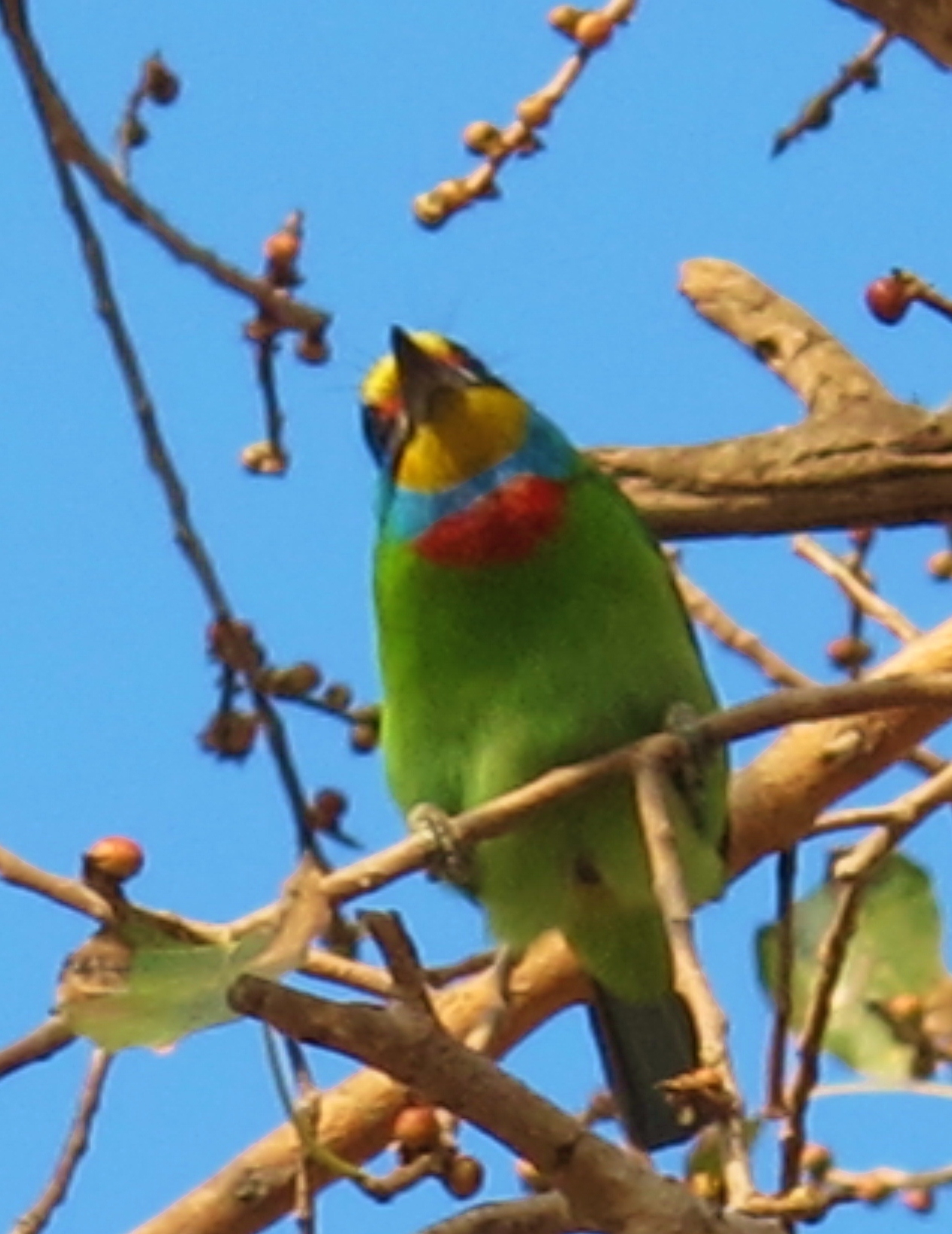
Taiwan Barbet. This common endemic can be quite approachable and often sits prominently on dead tree branches. The difficult part is getting good enough light to bring out its spectacular colors.

Taiwan Barbet, Kaohsiung City. This common endemic can be quite approachable and often perches prominently on dead tree branches. The difficult part is getting good enough light to bring out its spectacular colors.

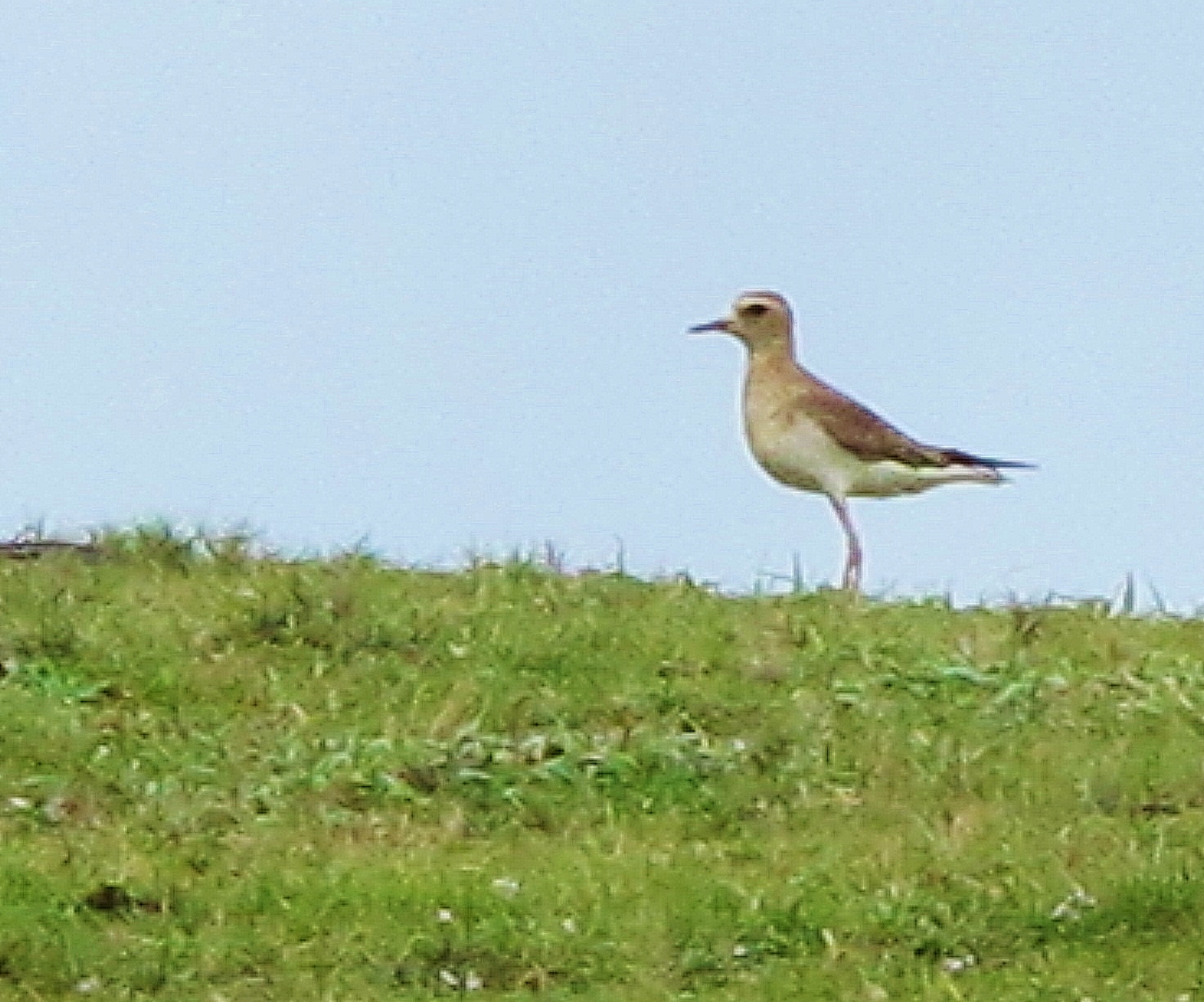
Oriental Plover, Green Island. I encountered this bird on a grassy coastal headland during a weekend camping trip to Green Island, off the east coast of Taiwan. It's a rare passage migrant in Taiwan.

Oriental Plover, Green Island. I encountered this bird on a grassy coastal headland during a weekend camping trip to Green Island, off the east coast of Taiwan. It’s a rare passage migrant in Taiwan.

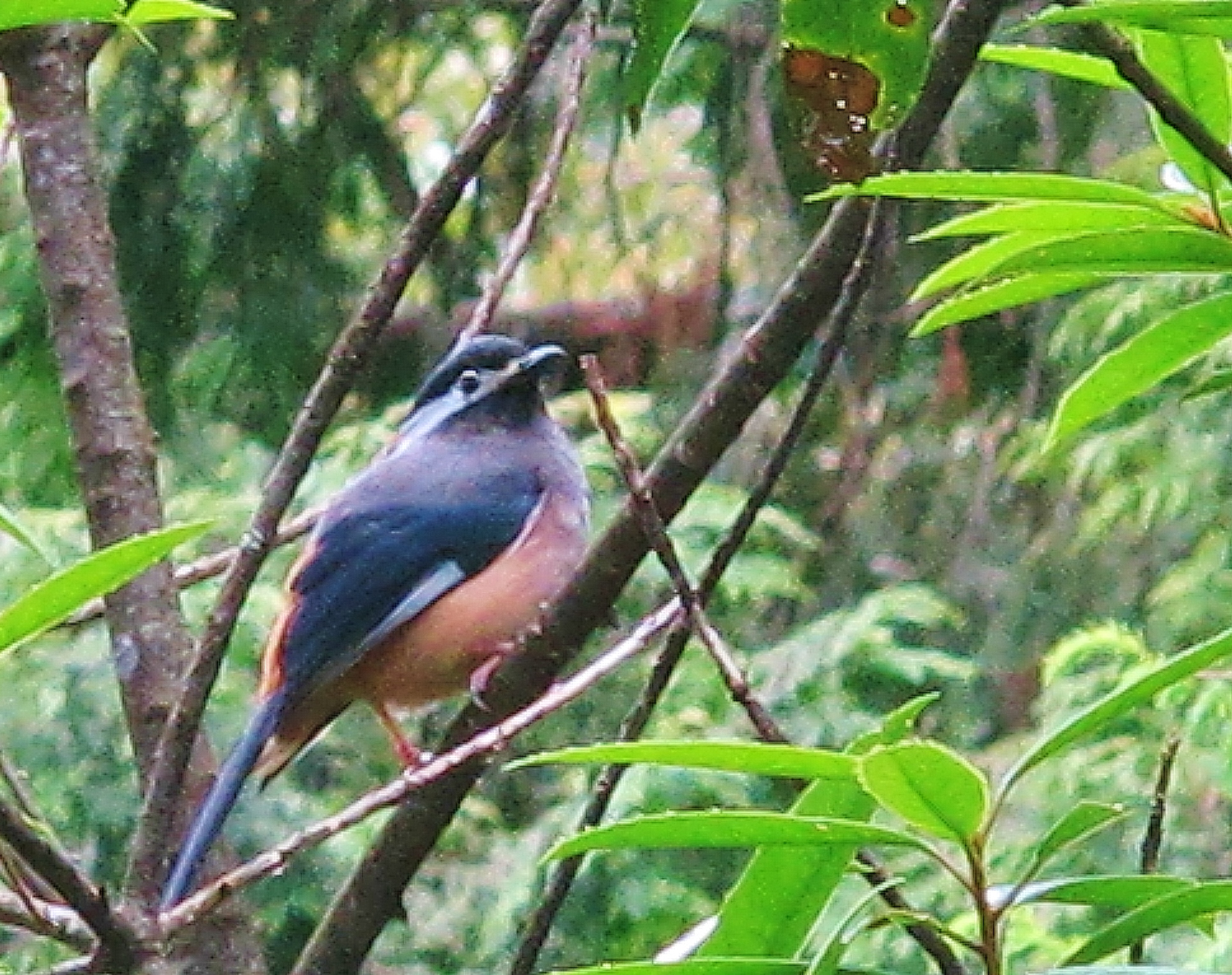
White-whiskered Laughingthrush, Dasyueshan. A common and often very tame endemic, found only at high elevations. Certain individuals become very accustomed to humans and can often be found hopping around at people's feet and even feeding from the hand.

White-whiskered Laughingthrush, Dasyueshan. A common and often very tame endemic, found only at high elevations. Certain individuals become very accustomed to humans and can often be found hopping around at people’s feet and even feeding from the hand.


Vinaceous Rosefinch, Dasyueshan. Now widely considered a Taiwanese endemic, and renamed Taiwan Rosefinch according to some authorities. Resident in high mountains, the female is rather nondescript but the male is a spectacular deep red bird.

Vinaceous Rosefinch, Dasyueshan. Now widely considered a Taiwanese endemic, and renamed Taiwan Rosefinch according to some authorities. Resident in high mountains, the female is rather nondescript but the male is a spectacular deep red bird.

Taiwan Sibia, Dasyueshan. A common endemic of mid-elevation mountains, it is an active bird usually found in treetops and can be difficult to capture on camera.

Taiwan Sibia, Dasyueshan. A common endemic of mid-elevation mountains, it is an active bird usually found in treetops and can be difficult to capture on camera.

Swinhoe's Pheasant, Dasyueshan. One of Taiwan's two special pheasants, this bird is an uncommon resident of mid-elevation mountain forests. They are fairly reliably seen at a stakeout at Km 23 on the road to Dasyueshan, which is where I took this photo early one morning.

Swinhoe’s Pheasant, Dasyueshan. One of Taiwan’s two special pheasants, this bird is an uncommon resident of mid-elevation mountain forests. They are fairly reliably seen at a stakeout at Km 23 on the road to Dasyueshan, which is where I took this photo early one morning.

Mikado Pheasant, Yushan National Park. This is usually reckoned to be the hardest of the endemic pheasants to find. A good place to try is Highway 18 between Alishan and Yushan, where birds sometimes emerge from the forest to feed on the grassy verges at first light. This is where I grabbed a snapshot of this male just before it disappeared into the trees.

Mikado Pheasant, Yushan National Park. This is usually reckoned to be the hardest of the endemic pheasants to find. A good place to try is Highway 18 between Alishan and Yushan, where birds sometimes emerge from the forest to feed on the grassy verges at first light. That is where I grabbed a snapshot of this male just before it disappeared into the trees.

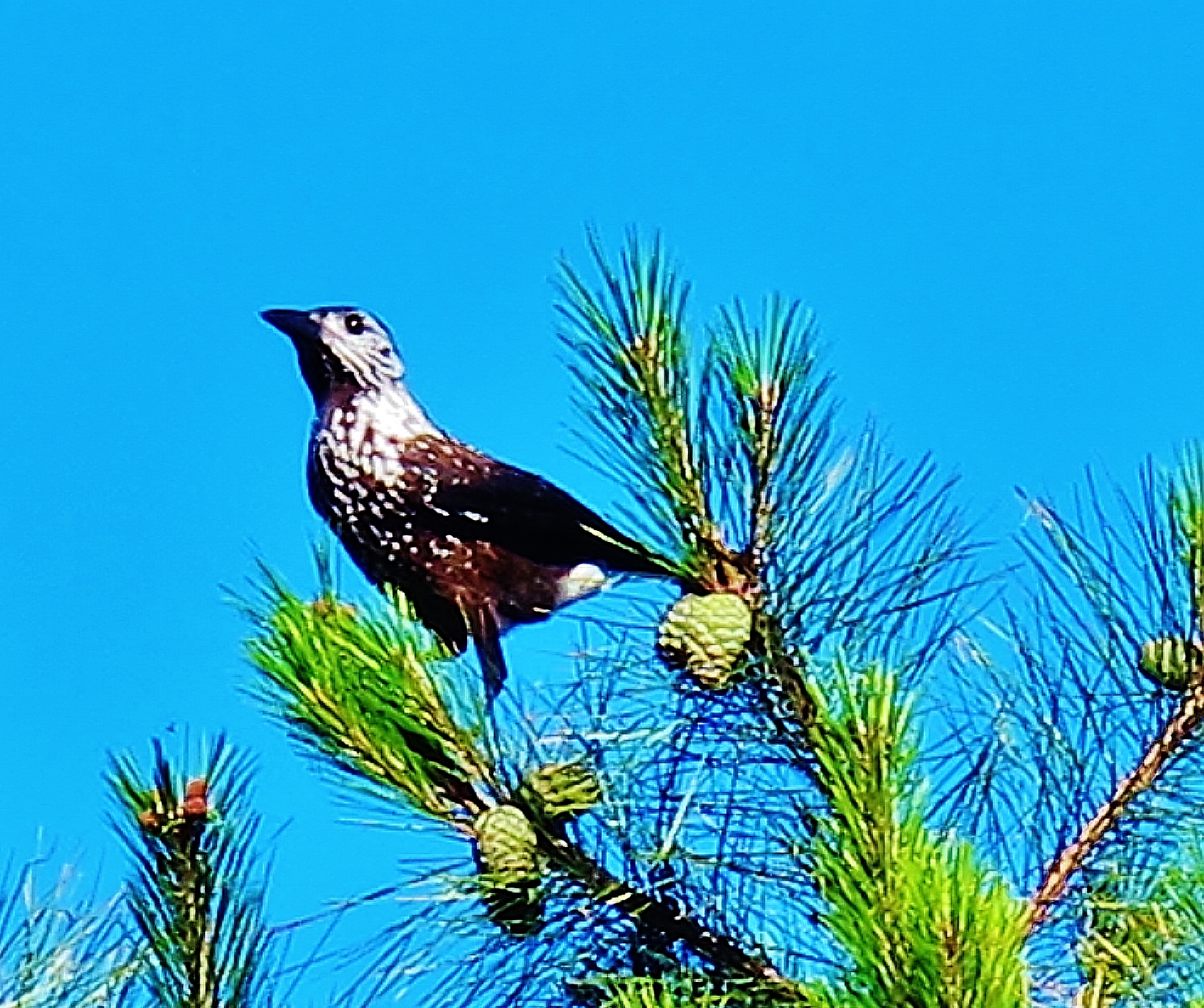
Spotted Nutcracker, Yushan National Park. A widespread montane Eurasian species, this bird is usually easy to find around Tataka Visitor Center in Yushan National Park (altitude 2,500m).

Spotted Nutcracker, Yushan National Park. A widespread montane Eurasian species, this bird is usually easy to find around Tataka Visitor Center in Yushan National Park (altitude 2,500m).

Collared Bush Robin, Yushan National Park. This attractive endemic is common in high mountains, and a few individuals seem to descend to lower levels in winter.

Collared Bush Robin, Yushan National Park. This attractive endemic is common in high mountains, and a few individuals seem to descend to lower levels in winter.

Maroon Oriole, Tsengwen Reservoir. This striking resident of low-mid elevation forests is usually considered to be scarce and local in Taiwan, although it can be easily found at Maolin and I regularly come across it in other areas, too.

Maroon Oriole, Tsengwen Reservoir. This striking resident of low-mid elevation forests is usually considered to be scarce and local in Taiwan, although it can be easily found at Maolin and I regularly come across it in other areas, too.

Taiwan Blue Magpie, Huisun. One of Taiwan's most attractive, and certainly its most charismatic, endemic species. Birders usually connect with this often hard-to-find bird at Huisun, where I took this photo, but there are other reliable sites e.g. Maolin.
Taiwan Blue Magpie, Huisun. One of Taiwan’s most attractive, and certainly its most charismatic, endemic species. Birders usually connect with this often hard-to-find bird at Huisun, where I took this photo, but there are other reliable sites e.g. Maolin.

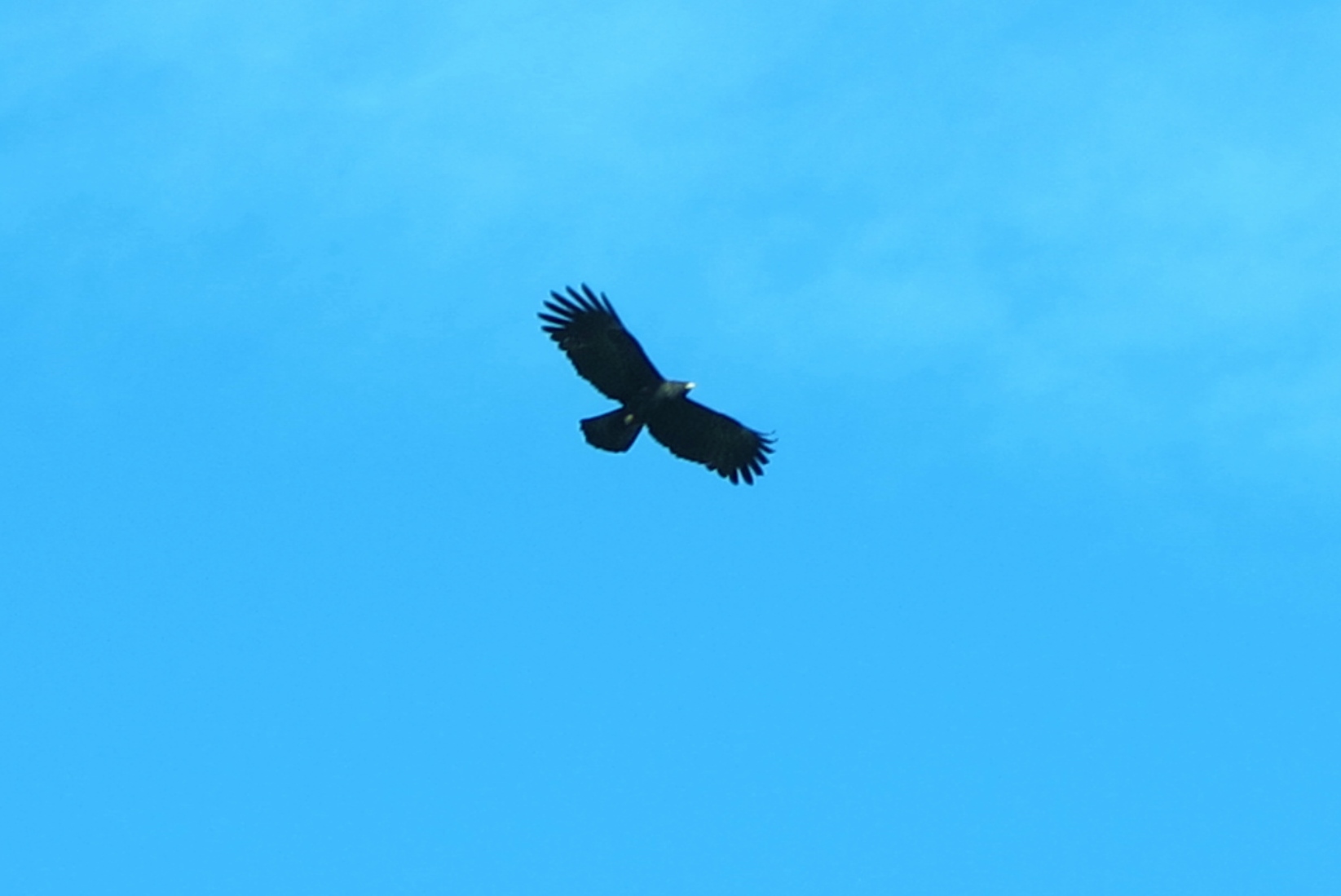
Black Eagle, Tengjhih National Forest. An uncommon and beautiful raptor of high mountain forests. I took this photo in Tengjhih where I see this species with some regularity.

Black Eagle, Tengjhih National Forest. An uncommon and beautiful raptor of high mountain forests. I took this photo in Tengjhih where I see this species with some regularity.

Scaly Thrush, Tengjhih National Forest. A classic East Asian species that is an enigmatic vagrant to Western Europe. When I was growing up, this was one of the birds I dreamed about seeing. It's good to report that they are fairly common - but usually shy - winter visitors to Taiwan. This individual was unusually confiding and allowed a very close approach.

Scaly Thrush, Tengjhih National Forest. A classic East Asian species that is an enigmatic vagrant to Western Europe. When I was growing up, this was one of the birds I dreamed about seeing. It’s good to report that they are fairly common – but usually shy – winter visitors to Taiwan. This individual was unusually confiding and allowed a very close approach.

White-tailed Robin, Tengjhih National Forest. A jewel of a bird that's not uncommon in  shady areas of mid-elevation forests in Taiwan.

White-tailed Robin, Tengjhih National Forest. A jewel of a bird that’s not uncommon in shady areas of mid-elevation forests in Taiwan.

Savanna Nightjar, Wutai. A nocturnal inhabitant of dry areas, scree slopes and dry, rocky river beds. It is rare to find one at its daytime roost, but they rely on camouflage and therefore usually allow a close approach.

Savanna Nightjar, Wutai. A nocturnal inhabitant of dry areas, scree slopes and dry, rocky river beds. It is rare to find one at its daytime roost, but they rely on camouflage and therefore usually allow a close approach.

Collared Finchbill, Wutai. A common resident of farmland and scrub in hills and low mountains. It's not a full endemic species but Taiwan is probably the easiest place in the world to see it.

Collared Finchbill, Wutai. A common resident of farmland and scrub in hills and low mountains. It’s not a full endemic species but Taiwan is probably the easiest place in the world to see it.

Steere's Liocichla and Taiwan Sibias, Tengjhih National Forest. Two for the price of one! These birds were coming to drink at a leaking pipe by the roadside. They are both common endemic species of mid-high elevation mountains.

Steere’s Liocichla and Taiwan Sibias, Tengjhih National Forest. Two for the price of one! These birds were coming to drink at a leaking pipe by the roadside. They are both common endemic species of mid-high elevation mountains.

White-bellied Green Pigeon, Tengjhih National Forest. A fairly common resident of mid-high mountains, these attractive pigeons are often found in pairs and small parties in flowering and fruiting trees.

White-bellied Green Pigeon, Tengjhih National Forest. A fairly common resident of mid-high mountains, these attractive pigeons are often found in pairs and small parties in flowering and fruiting trees.

Taiwan Bulbul, Kenting. While still abundant on the Kenting peninsula, this endemic species is seriously threatened by habitat loss and interbreeding with the introduced - and increasing - Chinese Bulbul.

Taiwan Bulbul, Kenting. While still abundant on the Kenting peninsula, this endemic species is seriously threatened by habitat loss and interbreeding with the introduced – and increasing – Chinese Bulbul.

Golden-headed Cisticola and Lesser Coucal, Gaoping River, March 27th

View across grassland on the east bank of the Gaoping River, on an unusually smog-free sunny day.

View across grassland on the east bank of the Gaoping River, on an unusually smog-free sunny day.

Highlights:

  • Golden-headed Cisticola 2
  • Lesser Coucal 1
  • Pheasant-tailed Jacana 1
  • Black-shouldered Kite 1
  • Purple Heron 1
  • Chinese Pond Heron 1
  • Green Sandpiper 1
  • Long-toed Stint 4
  • Marsh Sandpiper 1
  • Pacific Golden Plover c.10
  • Wood Sandpiper 14
  • Common Sandpiper 2
  • Little Ringed Plover 2
  • Common Greenshank 57
  • Black-winged Stilt c.60
  • Eastern Yellow Wagtail 1

Today I spent a very enjoyable and productive few hours birding at several locations along both the east and west banks of the Gaoping River. With temperatures hitting 30C (86F) by late morning, and clear smog-free skies, it was as close to a summer day as one can expect in late March.

On the Pingtung (east) side of the river, just north of the old railway bridge, there’s a fast-flowing stretch of river with pools and islands. More or less the first bird I saw was a Lesser Coucal, flying past me then disappearing into a dense patch of scrub, from where it started to sing. This is only the second time I have seen Lesser Coucal in Taiwan, so it was a very useful year tick.

Waders on and around the riverine islands included a Green Sandpiper (year tick), and a lone Marsh Sandpiper, keeping company with plenty of Wood Sandpipers, Common Greenshanks and Black-winged Stilts.

A few hundred meters south, past the railway bridge, a Black-shouldered Kite watched over the grassland from a bushtop.

Getting on the scooter, I drove back across the enormous Gaoping River bridge, then north up the west bank of the river as far as the Railway Bridge Marsh Park. A long and hot walk around the trails produced a Purple Heron and a breeding-plumaged Pheasant-tailed Jacana, but the real highlight was on the return journey close to the railway bridge: 2 singing Golden-headed Cisticolas. Their song is a curious wheeze followed by a “chip” note, which is delivered from a bush or in flight, and I got good views of both singing birds. Finally, one of the “little brown jobs” that had thus far eluded me finds its way to my Taiwan list.

I rounded off an excellent morning by setting up the scope under the bridge to look at the riverine islands, where 4 Long-toed Stints were the best of a small selection of waders.

Golden-headed Cisticola takes its place as my 157th bird species in Taiwan this year, and my 198th in Taiwan overall.