Black-necklaced Scimitar-Babbler, Tengjhih National Forest, July 27th

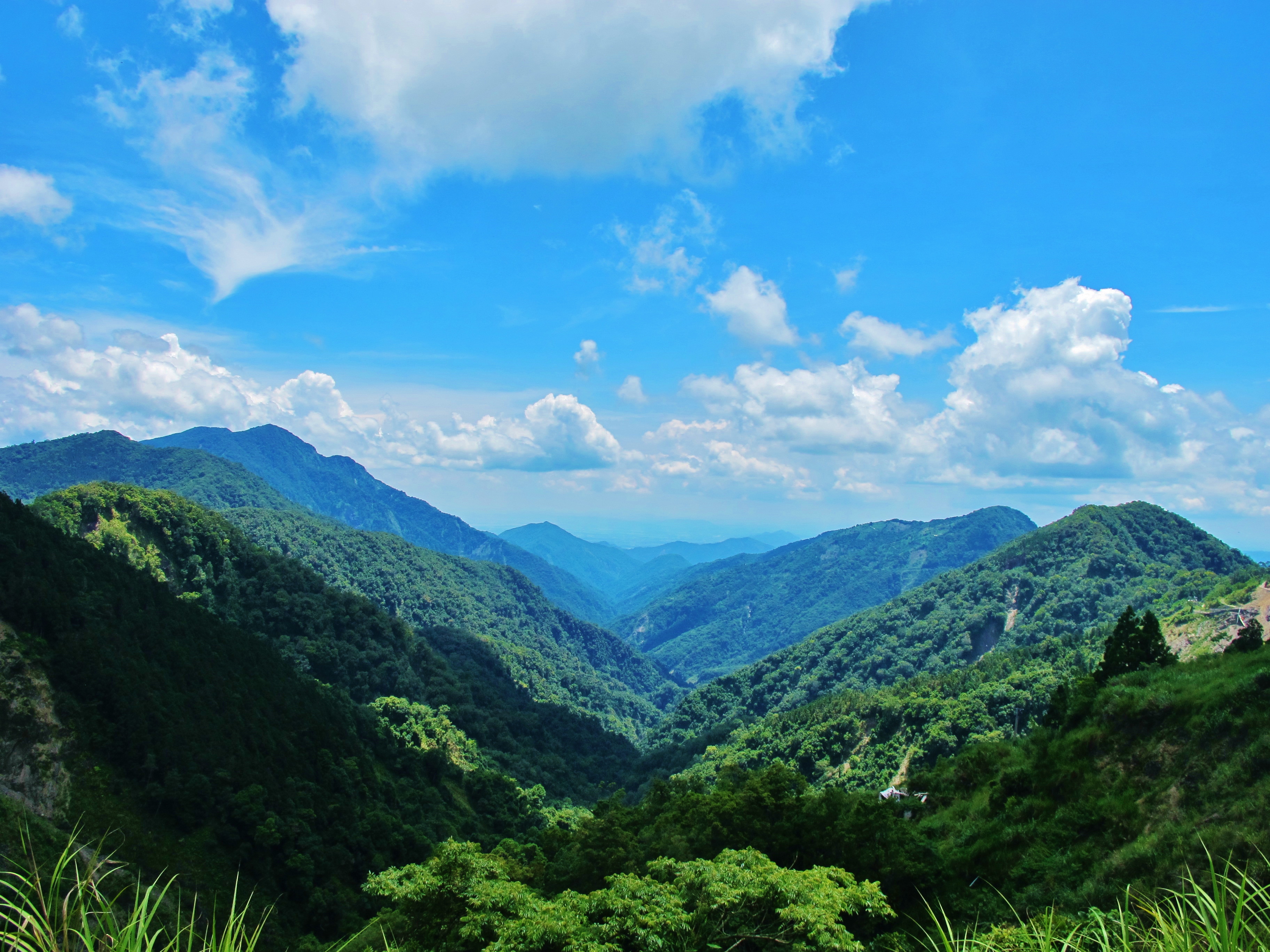
8.00am view from the trail to Tengjhih National Forest HQ.

8.00am view from the trail to Tengjhih National Forest HQ. A large butterfly wandered into the top of the frame, which I only noticed when editing the photo for this post!

It has taken just two weeks for Rufous-crowned Laughingthrush to tumble from “star bird” status, to not even warranting a mention in the post title. Incredibly, today I enjoyed no fewer than four separate sightings of these beautiful birds at various points along the trail to Tengjhih National Forest HQ.

I saw two flocks on the walk to the HQ, and two flocks on the way back. Timing, location and numbers (there were 3 to 6 birds in each group) suggested that probably three separate parties were involved. Some individuals – presumably young birds – were making high-pitched whining calls. Perhaps my rash of recent sightings is due to the birds becoming much easier to see at this time of year when they are attending to recently fledged young.

Today’s star bird billing goes to another rather elusive Taiwan endemic. Halfway along the trail, following up on some loud scolding calls in the undergrowth, I was surprised and pleased to discover three Black-necklaced Scimitar-Babblers. These birds showed very well for such a skulking species. While familiarising myself with their calls, I realised that I hear this bird quite often at Tengjhih, but this was my first actual sighting here.

Bird activity was fairly high again this morning. Laughingthrushes and Scimitar-Babblers aside, the best of the rest were at least four Yellow Tits along the trail. A good selection of the usual mid-elevation Taiwanese mountain birds were seen, including Green-backed Tit, White-tailed Robin, Rufous-capped Babbler, Rufous-faced Warbler, Grey-cheeked Fulvetta, Taiwan Yuhina, Taiwan Sibia and Steere’s Liocichla.

A male Vivid Niltava was singing again at the end of the road at Km 18, and a Black Eagle gave close views as I headed slowly back down the road.

The morning was to end very positively with a year tick: White-rumped Munia. A flock of five birds was seen in flight in grassland at the site of the large landslide (approximately Km 15.5). This is an abundant SE Asian species and supposedly also a common bird in Taiwan, but I’ve only rarely seen it here, and it’s taken me until July to get it on the year list.

Year tick: White-rumped Munia (total 218).

Rusty Laughingthrush and Taiwan Bamboo-partridge, Dahanshan, July 16th

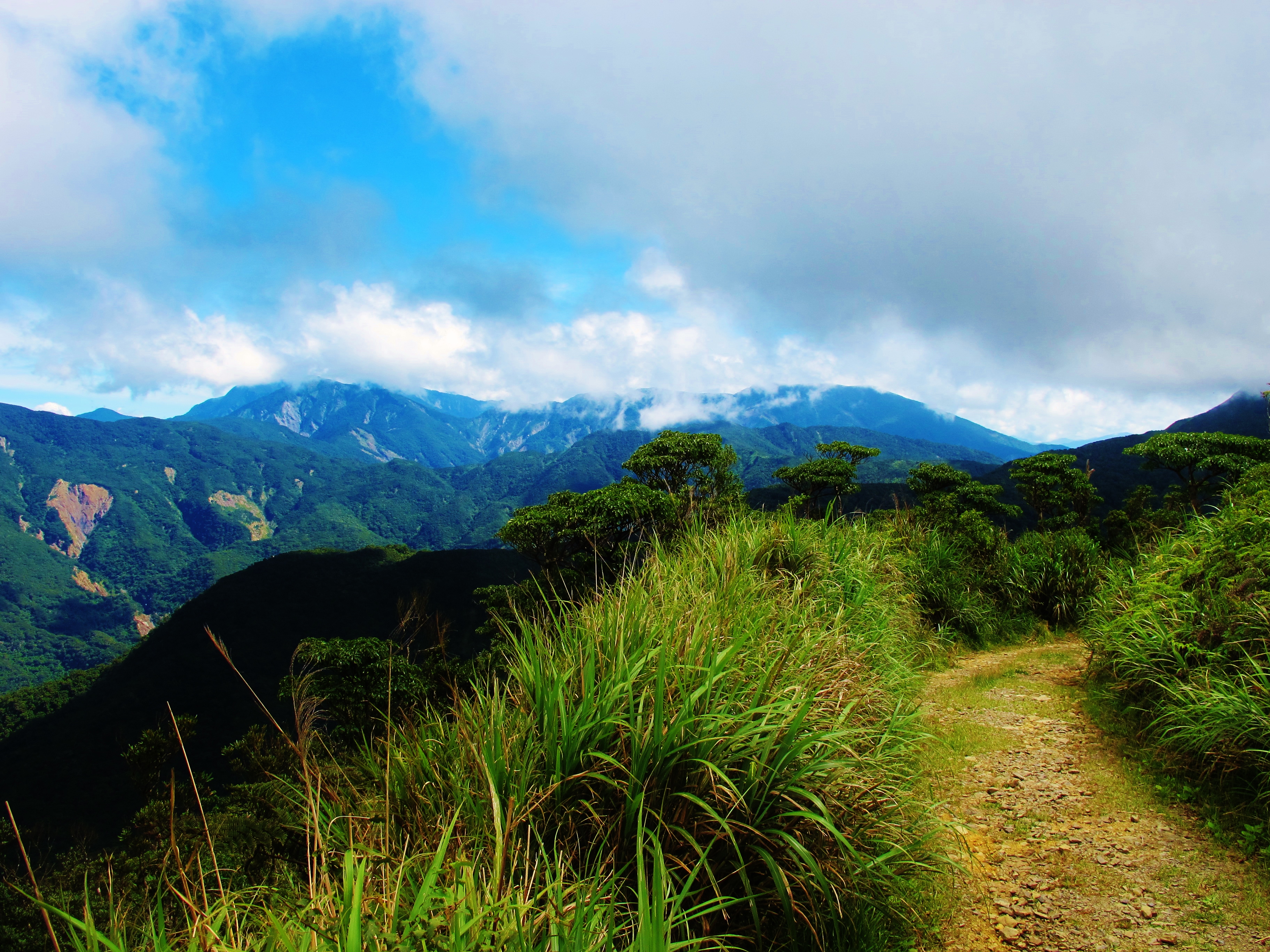
Wild mountain scenery at Dahanshan, which lies at the far southern edge of the central mountain chain in Pingtung County.

Wild mountain scenery at Dahanshan, which lies at the far southern edge of the central mountain chain in Pingtung County.

Birds seen:

  • Rusty Laughingthrush 2
  • Taiwan Bamboo-partridge 3
  • Black-eared Kite 3
  • Crested Goshawk 1
  • Large-billed Crow 2
  • Grey-capped Pygmy Woodpecker 1
  • Taiwan Sibia 5+
  • Rufous-capped Babbler 5+
  • Rufous-faced Warbler 5+
  • Grey-cheeked Fulvetta 5+

I had been meaning to check out Dahanshan for some time. This rather remote mountain lies at the southern end of the central mountain chain, in Pingtung County, and is accessed via an extremely poorly-surfaced 27km-long road from the town of Shueidiliao, just north of Fangliao.

Scenery at Dahanshan.

Scenery at Dahanshan.

Dahanshan lies at around 1,300 meters altitude, and it felt very cool and breezy up there – more so than I expected, given that it’s not a particularly high mountain, and sea-level weather conditions today were exceptionally hot. Unsurprisingly for mid-July, bird activity was low, but it was good to scope out the area and plan for return visits in fall and winter.

It took a bit of guesswork to find the access road, and the bumpy drive up the mountain seemed to take forever; I guessed my average speed was around 20km/h. The beautiful scenery compensated for the tedious driving. Along the way, I saw a Black-eared Kite on a roadside pole, then an adult Taiwan Bamboo-partridge and two well-grown young birds on the road – I just got a quick snapshot before they disappeared into cover. The more heavily wooded sections of the road, especially beyond Km 16, look like a good bet for Swinhoe’s Pheasant in the early morning.

Taiwan Bamboo-partridges, Dahanshan, July 16th.

Taiwan Bamboo-partridges, Dahanshan, July 16th.

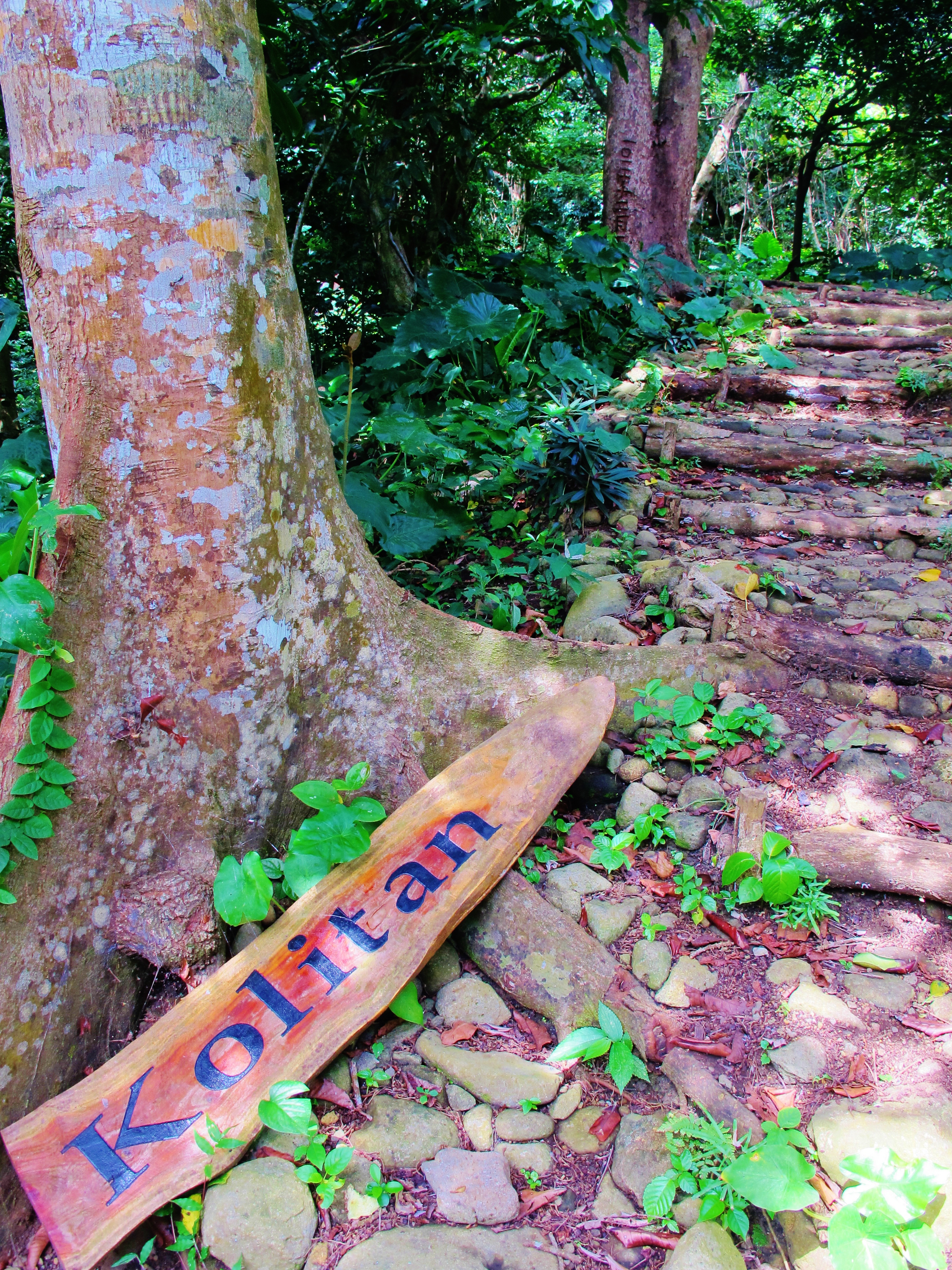
Just after the Km 23.5 marker, a parking area and signboard on the left mark the start of a wide trail through mountain forest and open scrubland. It’s about 15km long, and I am told that it emerges on the east side of Taiwan in Taitung County. This would undoubtedly make for a great day hike, although there would be logistical issues with transportation to and from the trailheads at each end.

Signboard on the Km 23.5 trail at Dahanshan. It would be good to walk the entire length of this trail one day, and see where in Taitung County it comes out.

Signboard on the Km 23.5 trail at Dahanshan. It would be good to walk the entire length of this trail one day, and see where in Taitung County it comes out.

I walked the trail for about 1km, seeing a pair of Rusty Laughingthrushes as well as small numbers of some of the commoner mid-altitude mountain birds.

Returning to the road, I continued to drive up the mountain, only to find my way blocked at Km 27 by a military installation. For birding, the best strategy is probably to focus on the trail, and the road between about Km 19 and Km 24.

Scenery along the Dahanshan - Taitung County trail.

Wonderful scenery along the Dahanshan – Taitung County trail.

Despite the feeling of remoteness, I wasn’t alone at Dahanshan, even on a Wednesday morning, with several butterfly enthusiasts in the area. At night, it is a popular place for herpetologists, with the rare Hundred Pacer snake sometimes seen.

I have been told that nocturnal visits to the upper reaches of the road can be productive for owls, with Collared Scops Owls regular, and Mountain Scops Owls also likely. I will have to return again when I’m feeling patient enough to tackle the never-ending access road.

Rufous-crowned Laughingthrush, Tengjhih National Forest, July 11th

Birds seen:

  • Rufous-crowned Laughingthrush 4
  • Yellow Tit 2
  • Maroon Oriole 1 male
  • Black Eagle 1
  • Vivid Niltava 1 male
  • White-tailed Robin 3
  • Green-backed Tit 5
  • Black-throated Tit 30
  • Grey-cheeked Fulvetta 1
  • Rufous-capped Babbler 2
  • Rufous-faced Warbler 15
  • Steere’s Liocichla 15
  • Taiwan Sibia 5
  • House Swift 30
  • Striated Swallow 30
  • Crested Serpent Eagle heard
  • Taiwan Barbet heard
  • Striated Prinia heard

Rufous-crowned Laughingthrush can be a particularly tricky Taiwanese endemic bird to see. Visiting birders usually see it in the north-central mountains at Dasyueshan – which is where I’ve had my only previous sighting – or one of the other mountain locations in the north. Further south, reports of this species are few and far between.

It had crossed my mind that there was a possibility to see this bird at Tengjhih, but I considered it an outside chance at best. So it was quite a surprise to encounter a group of four of these lovely birds, high in trees along the trail to the Tengjhih National Forest park headquarters. Two of them showed fairly well – including a preening bird in full view for a time. Much better than my previous sighting at Dasyueshan in dense fog.

Otherwise, bird activity was a lot higher than on my last Tengjhih visit in early June. Several post-breeding flocks of birds were roving through the forest and edges, including Yellow Tit and a good count of 5 individual Green-backed Tits. Oddly, no Taiwan Yuhinas were seen – usually it’s one of the commonest birds here. A male Maroon Oriole along the road near park headquarters was a surprising find at this altitude, a male Vivid Niltava sang from a bare tree branch at Km 18, and a superb Black Eagle passed low overhead near the Km 15 village.

Year tick: Rufous-crowned Laughingthrush (total 217).

East Asia Top 50 Birds

Grasslands in Kompong Thom province, Cambodia - one of the last remaining places to see the critically endangered Bengal Florican.

Grasslands in Kompong Thom province, Cambodia – one of the last remaining places to see the critically endangered Bengal Florican.

This is not entirely related to Taiwan, but working on my East Asian bird list the other day had me thinking about my favorite East Asian birds of all time. These are the critically endangered birds that I may never see again, those I worked the hardest to see, or simply the ones that remind me of a particular favorite place or great birding trip.

So, seeing as it’s summer and real birding is in short supply right now, I decided to take a virtual birding trip through the last eight years and put together a list of my favorite East Asian bird sightings. I had originally planned to compile a “Top 20” list, but with more than three times this number of species on my original draft, it was impossible to reduce it to 20.

Here are my Top 50 birds:

Japanese Night Heron: Endangered. One of those unexpected birding moments was finding one standing beside a concrete drainage channel at Taejongdae in Busan, at the very south-easternmost tip of South Korea, one April morning. It’s a very rare migrant in Korea.

Oriental White Stork: Endangered. A rare winter visitor to South Korea, but its size, coloration and preference for open marshes can make it conspicuous where it occurs. A group of five birds seen at Seosan, a regular wintering site.

Storm’s Stork: Endangered. Seen on several occasions along the Kinabatangan River in Sabah, Malaysian Borneo. This bird was one of the outstanding highlights of the narrow and bird-rich forest along the river, which is sadly much encroached-upon by palm oil plantations.

Giant Ibis: Critically endangered. Tmatboey in northern Cambodia is the last remaining place to find this spectacular and elusive bird, which seems like a relic from another era. We spent several days walking through the forest, checking the damp “trapaengs”, but it wasn’t until the last afternoon of our stay that we were finally able to enjoy incredible views of a pair.

Giant Ibis, Tmatboey, Cambodia, December 2012.

Giant Ibis, Tmatboey, Cambodia, December 2012.

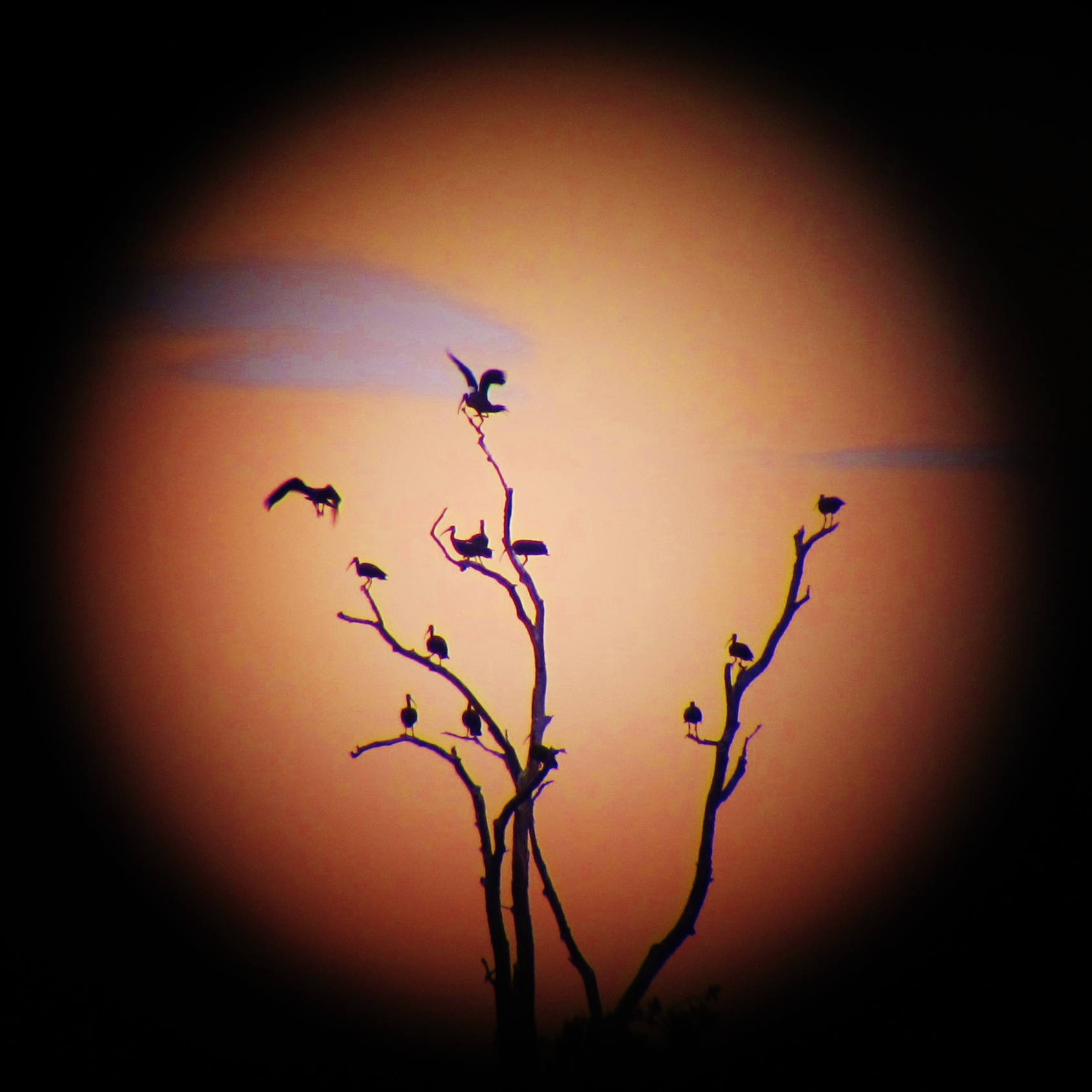
White-shouldered Ibis: Critically endangered. In the same area as the Giant Ibis, but easier to find as it has regular roosting sites.

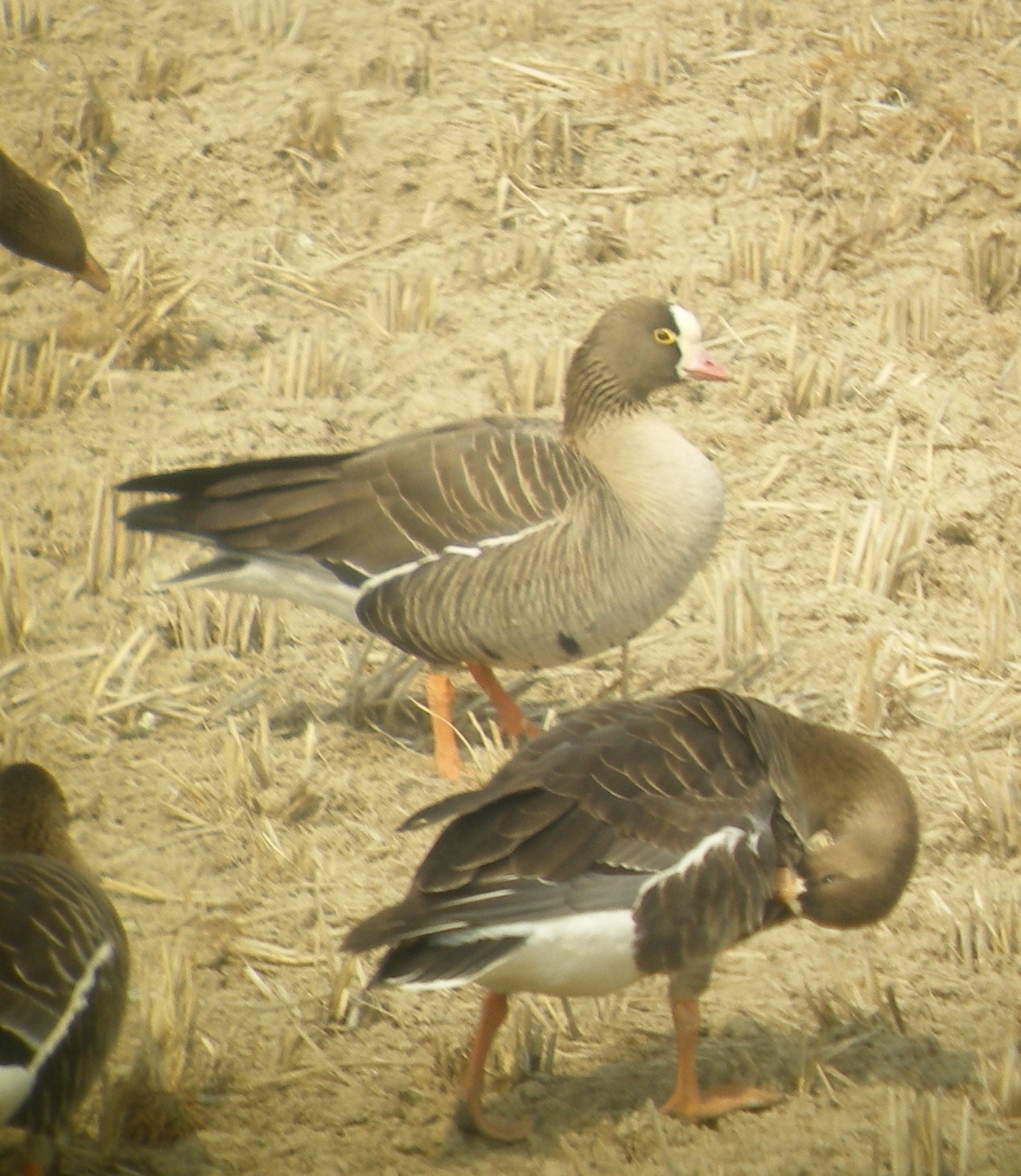
Lesser White-fronted Goose: Vulnerable. Each year, 1 – 5 of these rare birds overwintered among 10,000 Greater White-fronted Geese at my local patch in South Korea, Junam Reservoir. They always presented a special challenge to locate among the vast goose flocks.

Adult Lesser White-fronted Goose, Junam Reservoir, South Korea, March 2011.

Adult Lesser White-fronted Goose, Junam Reservoir, South Korea, March 2011.

Swan Goose: Endangered. Seen regularly in small numbers each winter at Junam Reservoir, South Korea.

Baikal Teal: Vulnerable. A beautiful and unpredictable East Asian duck, which wintered in highly variable numbers at Junam Reservoir, South Korea. Sometimes up to 3,000 were present during winter, but at other times just low single-figure counts.

Baer’s Pochard: Critically endangered and likely to become extinct in the next 10-15 years. An adult drake overwintered at Junam Reservoir, South Korea, in 2010/2011. Due to the catastrophic speed of its decline, this is a bird I feel I am unlikely to ever see again.
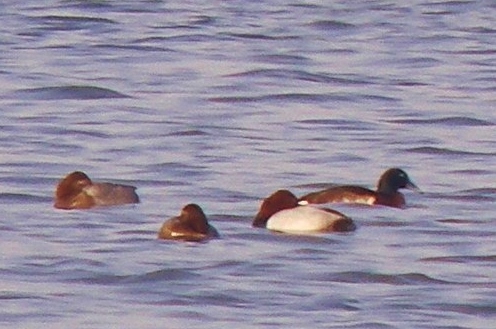
Adult drake Baer's Pochard (right hand bird), Junam Reservoir, South Korea, March 2011.

Adult drake Baer’s Pochard (right hand bird), Junam Reservoir, South Korea, March 2011.

Scaly-sided Merganser: Vulnerable. A speciality of South Korea that winters in small numbers on cold, fast-flowing rivers.

Steller’s Sea Eagle: Vulnerable. One of the world’s most spectacular birds of prey, small numbers (probably less than 10) overwinter each year in South Korea. Fairly conspicuous at its regular wintering sites. For me, this bird is synonymous with the partly frozen river mouths of the east coast of Korea on bitterly cold mid-winter days.

Eastern Imperial Eagle: Vulnerable. Accidental visitor to South Korea. An overwintering bird at Junam Reservoir, South Korea, in 2010/2011.

White-rumped Falcon: An inconspicuous and uncommon bird of dry deciduous forest in Southeast Asia, which I finally saw in northern Cambodia in 2012 after looking for it without success at Doi Inthanon in Thailand many times over a five-year period.

Taiwan Hill Partridge: One of the most difficult Taiwan endemics to see, it was most satisfying to find my “own” birds (away from the usually visited stakeouts) at Tengjhih National Forest in southern Taiwan.

Siamese Fireback: One of the world’s most subtly beautiful chickens, and one of the first really good birds I saw in SE Asia, at the excellent Cat Tien National Park in southern Vietnam in March 2006.

Mrs Hume’s Pheasant: A speciality of the grassy mountain forests of north-west Thailand, this bird can be hard to find even at its best-known stakeout, Doi Chiang Dao. I’ve seen it there on three out of perhaps fifteen visits. It’s a real stunner when seen well.

Swinhoe’s Pheasant: This Taiwanese endemic is well staked-out at several sites in the mountains of central Taiwan. I’ve seen it at one of these spots, at Km 23 on the Dasyueshan road, and also very well at the Huisun Forest reserve.

Swinhoe's Pheasant, Km 23, Dasyueshan.

Swinhoe’s Pheasant, Km 23, Dasyueshan.

Mikado Pheasant: Probably the harder of the two Taiwan endemic pheasants to find. My only sighting to date was of a male on the verge of Highway 18 between Alishan and Yushan, where it is regularly seen but usually only very early in the morning.

Bengal Florican: Critically endangered. The world’s rarest bustard. Seen several times in the grasslands of Cambodia’s Kampong Thom province.

White-naped Crane: Vulnerable. Up to 150 birds overwinter at Junam Reservoir in South Korea, despite the constant degradation of habitat and increase in human disturbance there.

Red-crowned Crane: Endangered. Large flocks winter close to the DMZ in northern South Korea, but my first and most memorable sighting of this species was a single bird in the south of the country at Junam Reservoir.

Red-crowned Crane, Junam Reservoir, South Korea, December 2009.

Red-crowned Crane, Junam Reservoir, South Korea, December 2009.

Oriental Plover: A rare and enigmatic migrant in East Asia. One on a grassy headland on Green Island, Taiwan, in April 2013.

Asian Dowitcher: A rare and range-restricted East Asian wader. Seen in winter in coastal Thailand, and I also found lone migrant birds at both Aogu and Tainan on the Taiwan coast in spring 2014.

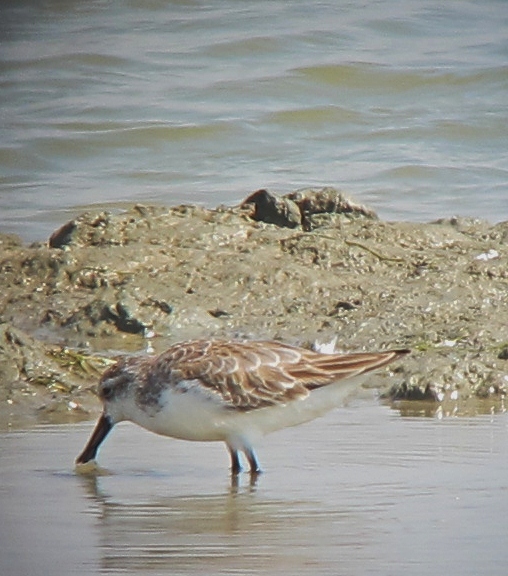
Spoon-billed Sandpiper: Critically endangered, and along with Baer’s Pochard and Giant Ibis, a likely candidate for imminent extinction. Seen at Pak Thale in Thailand, its most famous recent wintering site, in December 2012. Still hoping to find a migrant in Taiwan sometime.

Spoon-billed Sandpiper, Pak Thale, Thailand, December 2012.

Spoon-billed Sandpiper, Pak Thale, Thailand, December 2012.

Relict Gull: Vulnerable. A rather odd and little-known gull that winters in tiny numbers in South Korea. Seen on the Nakdong Estuary in Busan.

Chinese Tawny Owl: Like most owls, hard to find. Seen only once, close to Tataka in the Yushan National Park, Taiwan.

Spot-bellied Eagle Owl: This bird reminds me of many enjoyable evenings spent drinking beer while keeping half an eye open for owls in the grounds of Malee’s Bungalows in Chiang Dao, Thailand. Just once have my “efforts” been rewarded with a dusk fly-through view of this imposing species.

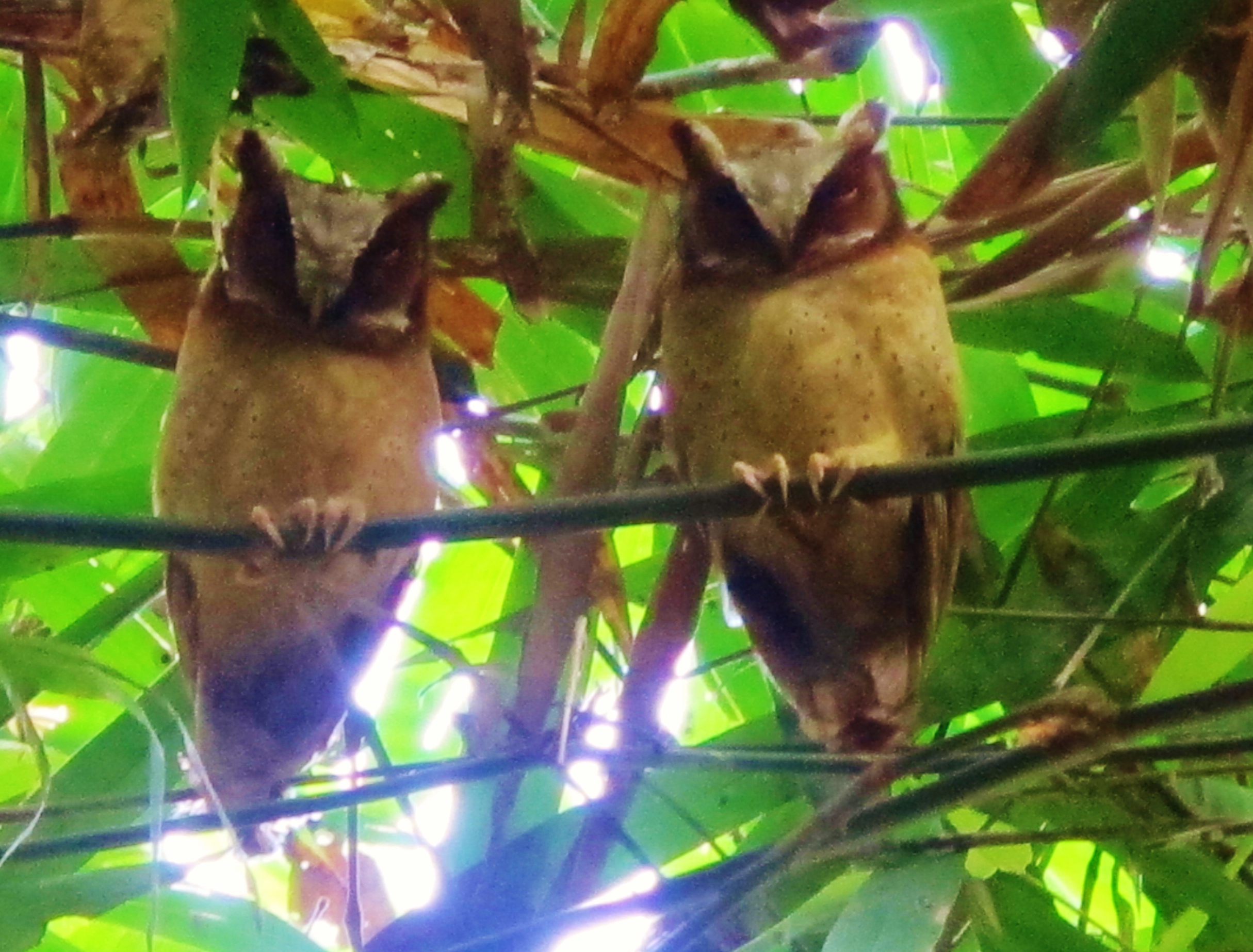
White-fronted Scops Owl: Excellent views of a day-roosting pair at the well-known stakeout in the Kaeng Krachan National Park, Thailand.

White-fronted Scops Owls, Kaeng Krachan National Park, Thailand, December 2012.

White-fronted Scops Owls, Kaeng Krachan National Park, Thailand, December 2012.

Lanyu Scops Owl: A classic endemic owl, the hard part is getting to its remote home island, but once you’re there in good weather conditions this species is not difficult to locate.

Fairy Pitta: Vulnerable. All of my East Asian pitta sightings probably warrant a place on this list, but Fairy Pitta is one of the most memorable of all due to its rarity and the quite exceptional views I enjoyed at Linnei Park, Taiwan.

Fairy Pitta, Linnei Park, Taiwan, May 2014.

Fairy Pitta, Linnei Park, Taiwan, May 2014.

Giant Pitta: One of the most difficult-to-see members of a notoriously elusive family. My only Giant Pitta was located by my bird guide during a night walk in forest next to the Kinabatangan River, Malaysian Borneo, where we had views down to a few feet as it roosted in a low tree. It was the first Giant Pitta my guide had ever seen, although he had spent more than 300 days guiding in the area – he was almost as excited as I was about this probable once-in-a-lifetime sighting.

Great Hornbill: Like the pittas, most of the spectacular hornbills arguably warrant a place on the Top 50 list. The Great Hornbill is the most beautiful of all, and one that I’ve seen on several occasions in Kaeng Krachan and Khao Yai, Thailand. The sound of its enormous wings beating overhead, or the sight of one perched in an ancient forest tree, are a reminder of former times when human pressures on the land were far less intense.

Bornean Bristlehead: Endemic to the island of Borneo, this scarce bird is high on the target list for any birder visiting the Danum Valley, where I encountered flocks of this rather odd species on two occasions during my five-day stay.

Jerdon’s Bushchat: This is a sought-after Southeast Asian species that I first saw from a boat on the Mekong river in Laos in 2006 – an excellent “seen from a boat” tick! More recently, I have seen it again at a regular stakeout near Tha Ton in northern Thailand.

Japanese Robin: This charismatic bird is a rare migrant in South Korea. Along with the spectacular Narcissus Flycatcher, it was the most hoped-for bird on the best April mornings for migrants at Taejongdae, South Korea.

Taiwan Thrush: The true thrushes are one of my favorite bird families, and I have been lucky enough to see most of the regular East Asian species. It was hard to choose just a couple of species for this list, but the stunning Taiwan Thrush, with its all-white head, is hard to beat. Its unpredictability and rarity add to its allure. I’ve encountered it on just two occasions in Taiwan.

Siberian Thrush: Another thrush that makes the grade is the beautiful Siberian Thrush, which I have seen on a few occasions in spring close to the lighthouse and in the wooded valley at Taejongdae, South Korea.

Green Cochoa: A beautiful, highly sought-after, very uncommon and difficult to find bird of hill forests in northern Thailand. It’s one of my “lucky birds” that I seem to see more than most other birders. The classic site is Doi Inthanon, but I’ve also encountered it at Doi Suthep, near Chiang Mai.

Styan’s Grasshopper Warbler: Vulnerable. This unremarkable-looking East Asian endemic lives mainly on remote islands. It makes this list because of its rarity, and the fact that it reminds me of a highly productive May visit to watch migrant birds on Gageo island, off the southwest coast of South Korea.

Narcissus Flycatcher: No one who has seen a spring male Narcissus Flycatcher could remain unmoved by the experience. Field guide plates cannot do justice to its beauty, and the depth of the yellow and fiery orange is simply amazing. I saw this bird several times in April at Taejongdae, South Korea.

Japanese Paradise-Flycatcher: Like Narcissus Flycatcher, this is a bird whose beauty in the flesh exceeds any field guide plate or photo I have seen. Two males on Lanyu Island, off the coast of Taiwan, were one of the highlights of my trip there.

Japanese Waxwing: An unusually late winter visitor to South Korea, usually arriving in mid-winter and staying until May in numbers that fluctuate widely each year. I found flocks of this beautiful bird on several occasions at Junam Reservoir.

Japanese Waxwing, Junam Reservoir, South Korea, March 2010.

Japanese Waxwing, Junam Reservoir, South Korea, March 2010.

Giant Nuthatch: A speciality of the montane pine forests of northern Thailand, especially at Doi Chiang Dao, where it seems to be becoming harder to find.

Yellow Tit: A contender for the cutest Taiwanese endemic bird, but it’s also one of the least common, and one of the few that are classified as Near Threatened – in this case due to illegal capture for the cage bird trade. It’s not too hard to find at Tengjhih National Forest in winter, and at one or two other sites in the central mountains.

Grey-headed Parrotbill: A speciality of Doi Chiang Dao in northern Thailand, where noisy feeding flocks can sometimes be seen especially behind the DYK substation. Like most parrotbills, it is charismatic, uncommon and unpredictable, and this bird has an especially smart and clean-cut appearance.

Cutia: A prize Southeast Asian bird that I’ve seen only once, in montane forest on the upper slopes of Lang Biang mountain in Vietnam.

Red-faced Liocichla: One of the birds I’ve spent the most time trying to find, I put in around 25 hours in the field over a three-day period before finally securing my first sighting of this spectacular laughingthrush at Doi Angkhang, northern Thailand, in June 2006. On subsequent visits to the area, I have found it much more easily.

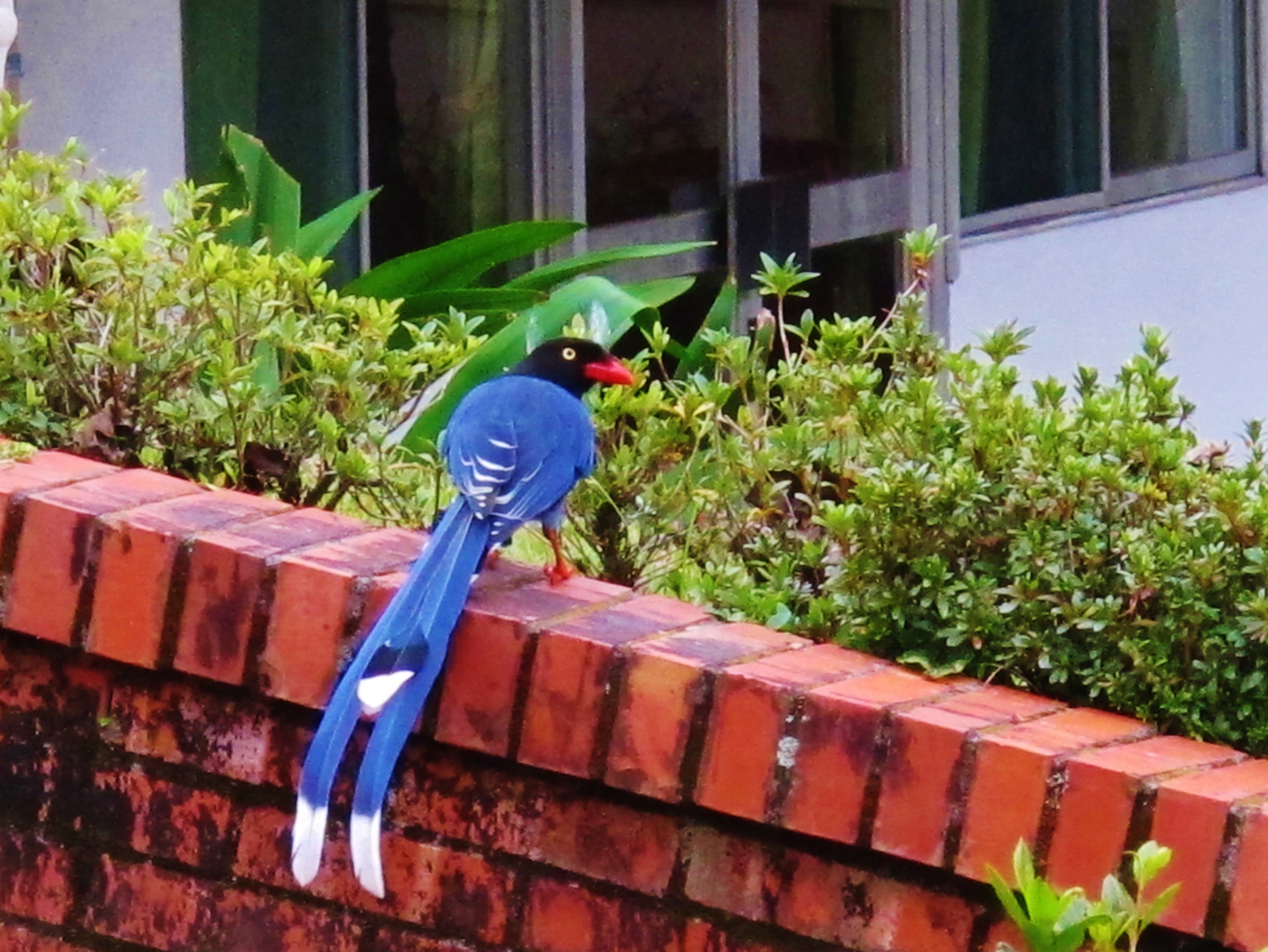
Taiwan Blue Magpie: Beautiful, charismatic, and often tricky to find, the Taiwan Blue Magpie is a strong contender for the most appealing Taiwanese endemic bird. I’ve encountered it at the classic site, Huisun Forest, but also regularly at the Maolin valley near Kaohsiung, and in the southern mountains on the Pingtung/Taitung border.

Taiwan Blue Magpie, Huisun, Taiwan, December 2013.

Taiwan Blue Magpie, Huisun, Taiwan, December 2013.

Daurian Jackdaw: A winter visitor in small numbers mainly to the northern part of South Korea. When present it’s easy to spot and very distinctive among flocks of wintering Rooks. It was one of my most wanted birds for many years after a failed “twitch” from the UK to Holland in the mid-1990s, so it was good to finally lay that ghost to rest in South Korea in 2010.

Ochre-rumped Bunting: Many of South Korea’s buntings have a claim to a place on this list, including the range-restricted Grey Bunting and rapidly-declining Yellow-breasted Bunting, but it’s the rare Ochre-rumped Bunting that makes the grade.

White-shouldered Ibis at dusk, Tmatboey, Cambodia, December 2012.
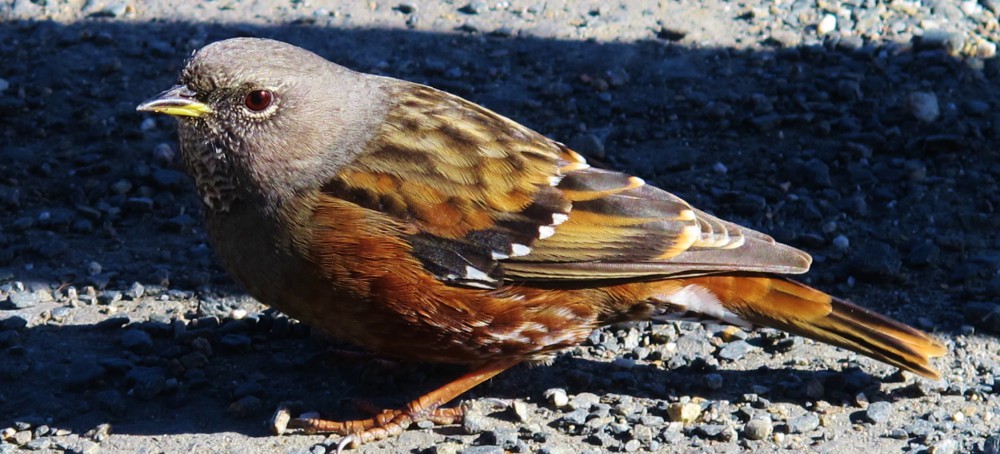
White-shouldered Ibis at dusk, Tmatboey, Cambodia, December 2012.
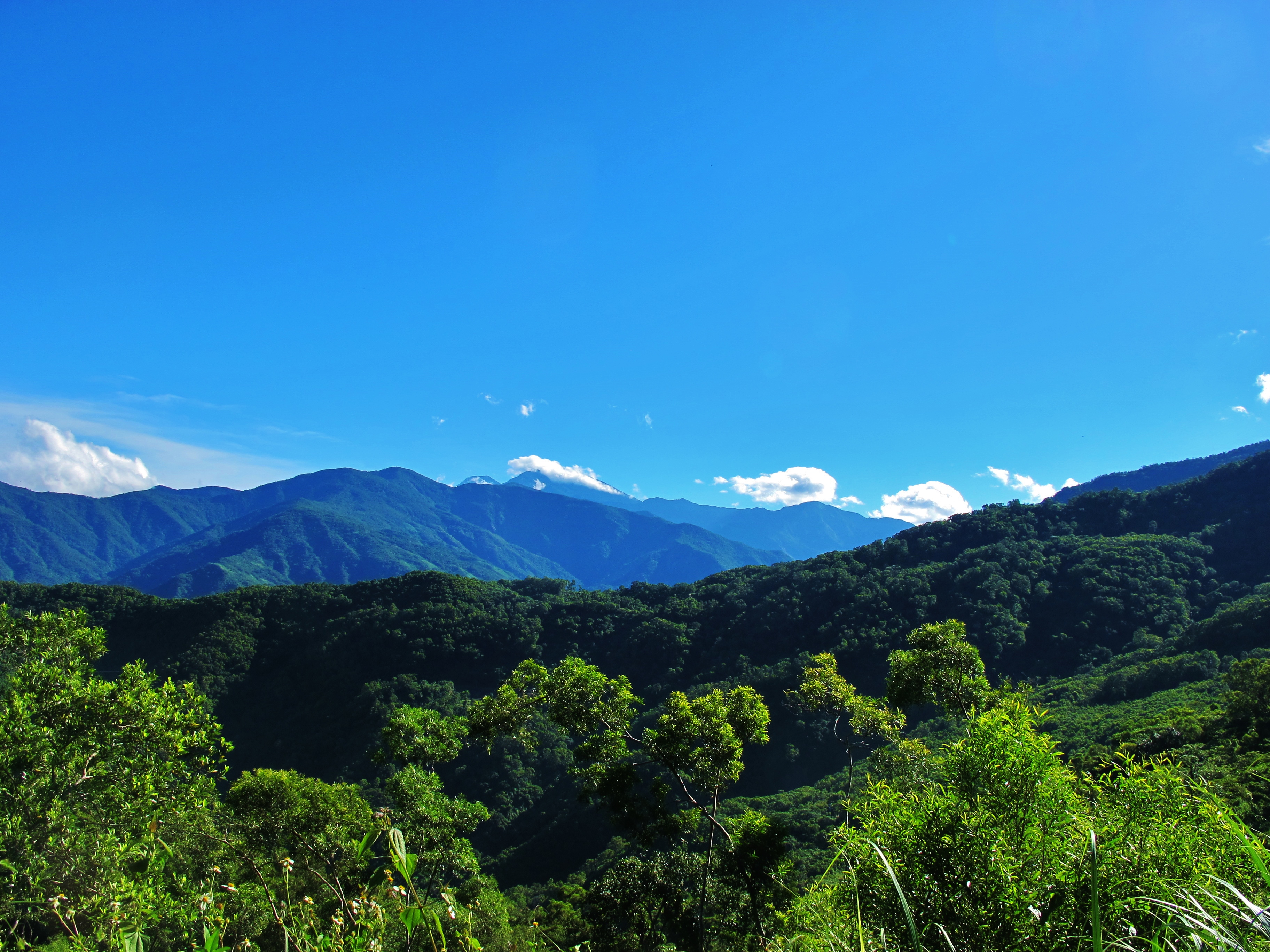
Peaceful (Zebra) Dove and East Asian Listing, July 1st

The super-hot Taiwan summer is in full swing and birding activity is low, so beach weekends have taken over from birding trips – at least until wader passage starts up again in August.

One local year tick I finally saw today was Peaceful Dove, also known as Zebra Dove. Kaohsiung has a small introduced population of these tiny doves, including a few pairs along the Love River, barely half a mile from my house. Urban pigeons, even cute ones like the Peaceful Dove, don’t get the pulse racing ….. which is probably why it’s taken me until July to go and see them.

I’ve also been hard at work compiling my East Asian bird list. Up until now, I’ve had separate lists for Southeast Asia, Korea, and Taiwan. I thought it would be interesting to combine them, which also provided a timely opportunity for some list housekeeping: the weeding out of any recently “lumped” species, and the incorporation of the latest splits.

The result was a respectable pan-East Asian list of 866 species. Thailand is the country where I’ve seen the highest number of birds, although I don’t keep a Thai list on its own. In rough order, next is South Korea, then Taiwan, Cambodia, Malaysian Borneo (Sabah) and Vietnam, with only around 10 additional species added during mainly non-birding visits to Indonesia and Laos.

Year tick: Peaceful Dove (total 216).

Lesser Frigatebird, Taitung County, June 21st

A most unexpected start to a beach and surfing weekend in Taitung County came in the form of an adult female Lesser Frigatebird, which flew directly over us as we drove up Highway 9 on Saturday morning.

At about the Km 400 mark, close to Taimali, I almost ran my scooter off the road in excitement when the unmistakeable silhouette of a frigatebird loomed overhead. It was being mobbed by the local House Swifts as it followed the coastline, heading south.

The frigatebird was quite low overhead and I didn’t even need binoculars to see the diagnostically shaped white breast patch, with a finger of white stretching on to the underside of each wing.

Lesser Frigatebird is a rare summer and autumn visitor to Taiwan, often associated with typhoons. The weather today was clear and sunny, but an offshore typhoon about six days prior to my sighting had produced a lot of rain in southern Taiwan. Perhaps this bird had been caught up in it and was in the process of relocating south?

Lifer: Lesser Frigatebird (total 1,784).

Dulan, Taitung County, June 14th and 15th

Pacific coast beach near Dulan.

The Dulan area is not just about the birding; some of the beaches are stunning and the chances are good that you’ll have them all to yourself.

With plenty of rain forecast for this weekend, I opted out of going to the mountains and instead went with my girlfriend to spectacular Taitung County, on the south-east coast of Taiwan.

It’s just about 4 hours drive from Kaohsiung to our favorite accommodation spot, the wonderful Sea Art Guest House nestled in the hills just to the south of the town of Dulan.

Located around 500 meters above sea level, the Sea Art Guest House is surrounded by lush tropical forest and backed by steep mountainsides. The gardens and surrounding trails are a good place to become acquainted with many of Taiwan’s mid-elevation forest birds.

During breaks in the rain, I spotted the following interesting birds around the garden and along the road leading up to the guesthouse: Maroon Oriole, Bronzed Drongo, Taiwan Bamboo-Partridge, Taiwan Scimitar-Babbler, Taiwan Barbet, Grey-capped Pygmy Woodpecker, Black Bulbul, Collared Finchbill, Grey Treepie, Black-naped Monarch and Emerald Dove.

At night, several Mountain Scops Owls could be heard calling around the property; unfortunately my attempt to spotlight them was thwarted by heavy rain on the Saturday night. The following night, the owls weren’t calling. I’ve heard this owl on numerous occasions in Taiwan, but have yet to see it ….. and it won’t count on the year list until I do!

Other birds occasionally seen around the Sea Art Guest House – but not by me – include Taiwan Blue Magpie and Swinhoe’s Pheasant.

At lower elevations close to the sea, Taiwan Bulbuls are very numerous here. We also saw a lone Black-naped Tern offshore during a trip up the coast to Chenggong.

Sunrise at a beach near Dulan, Taitung County (photo taken summer 2013).

Sunrise at a beach near Dulan, Taitung County (photo taken summer 2013).

Lanyu Island specialities, June 7th and 8th

Lanyu island.

Lanyu island.

Highlights:

  • Lanyu Scops Owl c.7
  • Japanese Paradise-Flycatcher c.12 including 2 long-tailed males
  • Taiwan Green Pigeon 4
  • Philippine Cuckoo-Dove 1
  • Lowland White-eye 100s
  • Brown-eared Bulbul 100s
  • Middendorff’s Grasshopper Warbler 1
  • Emerald Dove 6
  • Blue Rock Thrush 6
  • Brown Shrike 1
  • Pacific Reef Heron 2
  • Black-naped Tern 1+

Sea crossings:

  • Wedge-tailed Shearwater 1+
  • Streaked Shearwater 1
  • Brown Booby 2

Enticingly remote Lanyu (Orchid) Island is a must-visit destination for any resident or visiting birder on Taiwan. Number one on most people’s wanted lists is a bird that is increasingly considered to be a true endemic, the Lanyu Scops Owl. The island also holds two species found nowhere else in Taiwan (Philippine Cuckoo-Dove and Lowland White-eye), one breeding species which elsewhere in Taiwan is only a very rare migrant (Japanese Paradise-Flycatcher), one range-restricted bird which is rare on the mainland but which can be easily seen on Lanyu (Taiwan Green Pigeon), and one species that in Taiwan is only found on a trio of remote offshore islands (Brown-eared Bulbul).

These birds are all relatively easily found. The white-eye and the bulbul are abundant everywhere, and the others should be located within a few hours by checking the key sites.

Lowland White-eye, Lanyu Island, June 8th.

Lowland White-eye, Lanyu Island, June 8th.

Getting to the island is part of the adventure. There are three ways to do it: by small plane from Taitung airport, or by ferry from Fugang Harbor near Taitung or Houbihu Fishing Harbor near Kenting. Flights are frequently cancelled due to bad weather, and boats delayed or cancelled because of rough seas. Tickets – especially for the plane – often sell out months in advance. The flight is said to be a nerve-racking experience on a windy day. Meanwhile, the ferry crossing over rough seas is known to turn even the strongest stomachs inside out, and the most robust sea legs to jelly.

Brown-eared Bulbul, Lanyu Island, June 8th.

Brown-eared Bulbul, Lanyu Island, June 8th.

Not speaking any Chinese makes booking transport to the island even more of a challenge. In addition, I was reluctant to commit to a Lanyu trip too far in advance in case of bad weather. I watched the forecasts like a hawk in the week leading up to the trip, and on Friday night decided it was worth a punt. After about 3 hours sleep (still jet-lagged from my England trip and way too excited about Lanyu), I got up at 3.30am on Saturday, loaded up my scooter and headed out in the dark for the 2-hour drive to Houbihu Fishing Harbor. This boat sails at 7.30am daily and, from what I could ascertain online, only between March and October.

The ferry turned out to be full (that much Chinese I could understand from the guy at the port), but I resolutely refused to understand what he said and kept insisting on one return ticket to Lanyu. Finally, the boat man gave up and sold me a ticket, which was the easiest escape for him. If I’d been traveling as part of a couple or a group, I doubt I would have been that lucky. The money (2,000NT for a return journey) probably went straight into the boat man’s pocket, but I didn’t care, I was on the ferry and heading to Lanyu.

Approaching Lanyu in fine weather on calm seas. It was much rougher on the return crossing the following day.

Approaching Lanyu in fine weather on calm seas. It was much rougher on the return crossing the following day.

The crossing was sunny and calm, and I bagged a prime spot on the outside deck just behind the cabin. Despite the favorable viewing conditions the sea was barren, with the 2.5 hour voyage producing just four individual birds. Best among these was a dark morph Wedge-tailed Shearwater that flew close alongside the boat for a while. Later, another probable – or maybe it was the same bird – was seen much more distantly. Finally, two Brown Boobies included one flushed from the sea by the boat which I managed to photograph:

Brown Booby, at sea between Kenting and Lanyu Island, June 7th.

Brown Booby, at sea between Kenting and Lanyu Island, June 7th.

I hadn’t booked anywhere to stay on Lanyu, and was prepared to sleep rough if I had to. There are very few hotels on the island; most accommodation is in family-run homestays which get booked in advance especially at weekends by Taiwanese visitors. From the port, I started walking up the road towards the nearest village, but hadn’t gone far before a car pulled up and the American-accented local inside asked me in perfect English if I needed a room. Thanks to this stroke of good fortune, I ended up with a room in a friendly homestay in Yeyin village on the eastern side of the island. I rented a scooter (400NT per 24 hours, Taiwan or international driving licence required) and by mid-morning I was ready to go birding.

Japanese Paradise-Flycatcher, Lanyu Island, June 8th.

Japanese Paradise-Flycatcher – a relatively drab female-type bird. Sadly I didn’t get any photos of the splendid males, despite much trying. 

Like most birders, I intended to head straight to “Flycatcher Creek” which is known to host all of Lanyu’s special birds. Unfortunately I hadn’t done my homework thoroughly enough and only had a vague idea of its location (I thought it was somewhere on the west coast between the main port village and the airport). I figured it would be obvious when I arrived, but it wasn’t. I did find a rather open gravel riverbed in this area and scrambled inland along it for a few hundred meters, seeing my only Philippine Cuckoo-Dove of the trip, as well as legions of Brown-eared Bulbuls and Lowland White-eyes.

Near the road, I flushed a warbler from an area of rank grass, which revealed a long, broad, slightly fanned tail with white tips before it dived into deep cover again. Later, I flushed it again and had similar brief flight views. From its size, shape, tail pattern and habits it was obviously a locustella, but which one? Rather uniform upperparts and lack of heavy streaking or a noticeably brighter rufous-brown rump ruled out Pallas’s Grasshopper Warbler. Of the other two likely candidates, Styan’s and Middendorff’s, it would seem that the latter is probably a common migrant through Lanyu (sightings of this bird on the island pop up in other trip reports), albeit under-recorded. It’s also a late bird, with peak migration along the mainland Chinese coast continuing well into June. So I concluded that my bird was almost certainly a Middendorff’s Grasshopper Warbler, not a lifer (I’ve seen one in Korea) but a good find nonetheless.

I continued south, past the airport and through Hongtou village, until I saw a large grassy area on the seaward side of the road. A little further on, a bridge passes over a very deep and heavily wooded gorge, and just past here a small concrete road turns inland. The entrance to the road looks like this:

Entrance to the best birding trail I found on Lanyu, near the south west corner of the island.

Entrance to Flycatcher Creek on Lanyu, near the south west corner of the island.

Fifty meters along this concrete road, just before a bridge, a steep and stone-surfaced path descends to a riverbed. As soon as I arrived, I figured that this was surely Flycatcher Creek, and as if to confirm this thought I had the briefest of glimpses of a Lanyu Scops Owl flying through the treetops just as I stepped off my scooter.

I birded the first 500 meters of this trail (marker posts are handily placed every 100 meters), and saw about 12 Japanese Paradise-Flycatchers at various spots, including two splendid long-tailed males. I was expecting this bird to look good, but wow …. even the finest photos and field-guide plates don’t do any justice to the real thing. It really is a stunner. I also found a nest, and another pair feeding fledged young.

Just past this sign, on the Flycatcher Creek trail, a Taiwan Green Pigeon was nest-building directly above the path.

Just past this sign, on the Flycatcher Creek trail, a Taiwan Green Pigeon was nest-building directly above the path.

I also found a Taiwan Green Pigeon in the process of nest-building right above the trail, but never got a clear enough view to take a photo. Also along here, I saw about 6 Emerald Doves, mainly in flight along the riverbed but also feeding on the ground.

Having secured all the special birds of the island, and in the case of the owl intending to return after dark for better views, I continued around the island and finally completed a full circuit on my scooter. Lanyu is famous for its rock formations, some of which are truly remarkable, and the scenery in general is stunning. The island has much in common with the Philippines, and certainly felt far removed – not only geographically – from mainland Taiwan, while the grazing livestock (mainly goats) and dry stone walls almost made it feel like a tropical Scotland at times.

One of Lanyu Island's remarkable rock formations.

One of Lanyu Island’s remarkable rock formations.

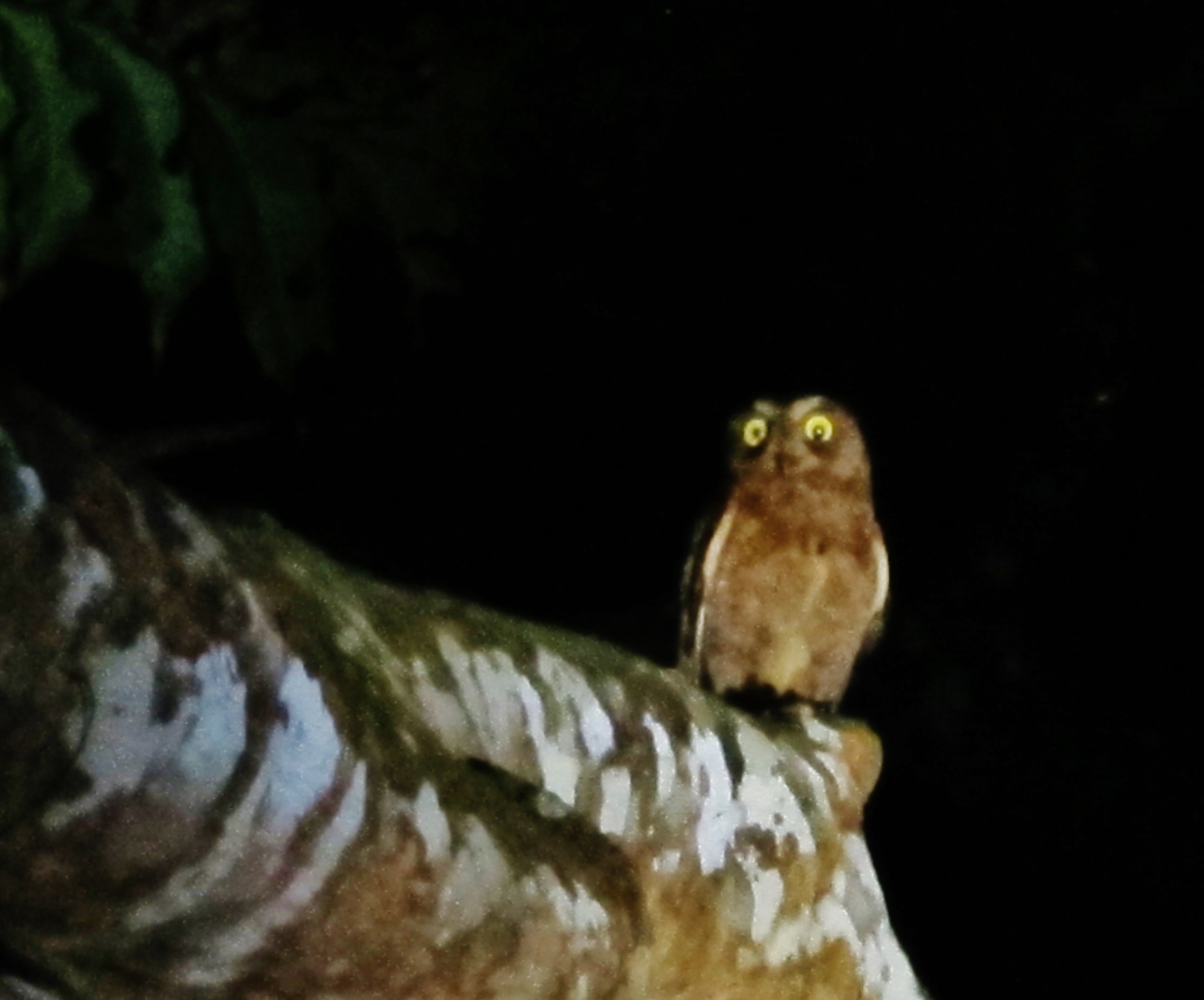
Not wanting to take any chances with the Lanyu Scops Owl that night, I signed up for a guided owl tour that departed my homestay at 7.30pm. From Yeyin village, we drove south for a couple of kilometers as far as a kind of white monument and concrete road on the right. Upon entering the forest, we immediately heard Lanyu Scops Owls calling, and over the course of a couple of hours managed to see about 7 of them including a pair around a nest hole.

There were at least 40 other visitors looking for the owls – and other endemic night wildlife – in the forest here, in various small guided groups. It was good to see local guides benefiting directly from the owl, and should help to ensure its continued protection here – I happily paid my 250NT for the experience and would do so again.

Lanyu Scops Owl, Lanyu Island, June 7th.

Lanyu Scops Owl, Lanyu Island, June 7th.

The next day, with all the key birds seen and the pressure off, I took another walk in Flycatcher Creek – seeing most of the same birds – and toured the island again, concentrating on some of the farmland areas in an attempt to find Eastern Water Rail, but it wasn’t to be.

Near the ferry harbor, a small group of about three or four terns just outside the harbor walls contained at least one white-crowned Black-naped Tern, and I thought there may have been a Roseate Tern among them but the birds were distant and a heavy rain shower was passing at the time, so confirmation was impossible.

The return ferry crossing was rather rough with big waves and plenty of spray, and I stayed out on deck throughout. There were more birds over the sea than on the outward journey but viewing conditions were very challenging; however, one Streaked Shearwater passed very close to the boat. There were also some all-dark shearwaters, about eight of them in total during the voyage – they might have been Wedge-tailed Shearwaters or even Bulwer’s Petrels, but with no more than distant split-second glimpses through soaking wet optics I had to give them up as unidentified.

Overall it was a perfect visit to a lovely island. Visiting birders would probably be best advised to travel midweek when there is less pressure on availability of transport and accommodation.

Lifers: Lanyu Scops Owl, Japanese Paradise-Flycatcher, Taiwan Green Pigeon, Philippine Cuckoo-Dove, Lowland White-eye, Wedge-tailed Shearwater (total 1,783).

Taiwan ticks: Brown Booby, Middendorff’s Grasshopper Warbler (total 237).

Year ticks: Brown-eared Bulbul, Streaked Shearwater, Black-naped Tern (total 214).

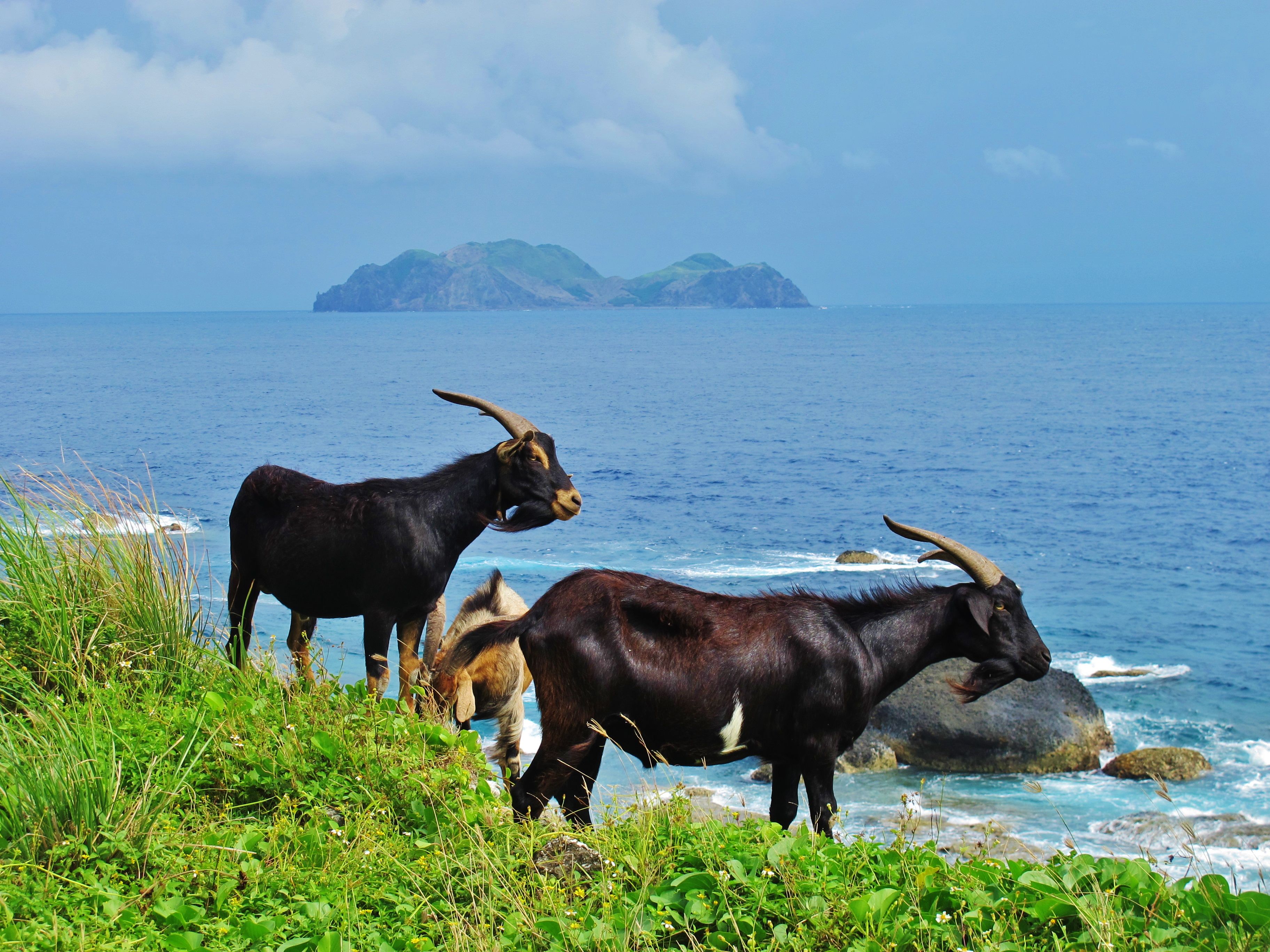
Lanyu Island goats.

Lanyu Island goats.

Tengjhih National Forest, June 2nd

Not many birds around today, but with views and weather like this, who cares?

There weren’t many birds around today, but with views and weather like this, who cares?

After a relaxing 10 days in England, I returned to the heat, humidity and slow birding of the Taiwanese summer. The rainy season is upon us, but the forecast for Dragon Boat Day was dry – even in the mountains – so after a late start I drove up to Tengjhih National Forest.

In the middle of the day in early June, I wasn’t expecting to see much. The forest trail from Km 18 to the old Tengjhih National Forest HQ was very quiet, with only small numbers of the commonest species (Steere’s Liocichla, Taiwan Sibia, Rufous-faced Warbler, Taiwan Yuhina). A Striated Prinia sang intermittently at the landslide at Km 18, and Striated and Pacific Swallows and House Swifts circled overhead.

However, the lack of birds was compensated for by the lovely clear, sunny weather, and as usual for this site, rather few visitors despite it being a national holiday today.

Taiwan Bush-Warbler and Russet Sparrow, Alishan/Yushan, May 17th and 18th

Early morning views at about Km 53 on Highway 18. Alishan is a magical place.

Early morning views at about Km 53 on Highway 18. Alishan is a magical place.

Highlights:

  • Taiwan Bush-Warbler 1 seen well plus others heard
  • Russet Sparrow 1 male
  • Taiwan Wren-Babbler 2
  • Vinaceous Rosefinch 6
  • Ferruginous Flycatcher 3
  • White-backed Woodpecker 2
  • Flamecrest 1 seen well plus others heard

Others: White-whiskered Laughingthrush, Steere’s Liocichla, Taiwan Whistling-Thrush, Taiwan Fulvetta, Taiwan Sibia, Taiwan Yuhina, Collared Bush-Robin, Yellowish-bellied Bush-Warbler, Rufous-faced Warbler, Green-backed Tit, Black-throated Tit, Spotted Nutcracker, Large-billed Crow, Striated Prinia, Asian House Martin.

For my last roll of the birding dice this spring, I chose to visit Alishan and Yushan. It was my first visit to the high mountains this year, and easy year ticks like White-whiskered Laughingthrush and Taiwan Fulvetta were waiting for me up there. Also this is an excellent time of year for a crack at the highly elusive Taiwan Bush-Warbler, which is almost impossible to find when not singing. As a final temptation, several online trip reports mentioned that my “most wanted” bird – Russet Sparrow – can be seen in the village of Xiding, halfway up the mountain.

Non-birders – and even some birders – are probably vexed by my fixation with Russet Sparrow. It’s a scarce species in East Asia, one I missed when I lived in Korea and one that I’ve spent quite a lot of time looking for in Taiwan. Here it’s known to be rare and declining, with a population of less than 1,000 birds confined to mid-elevation villages.

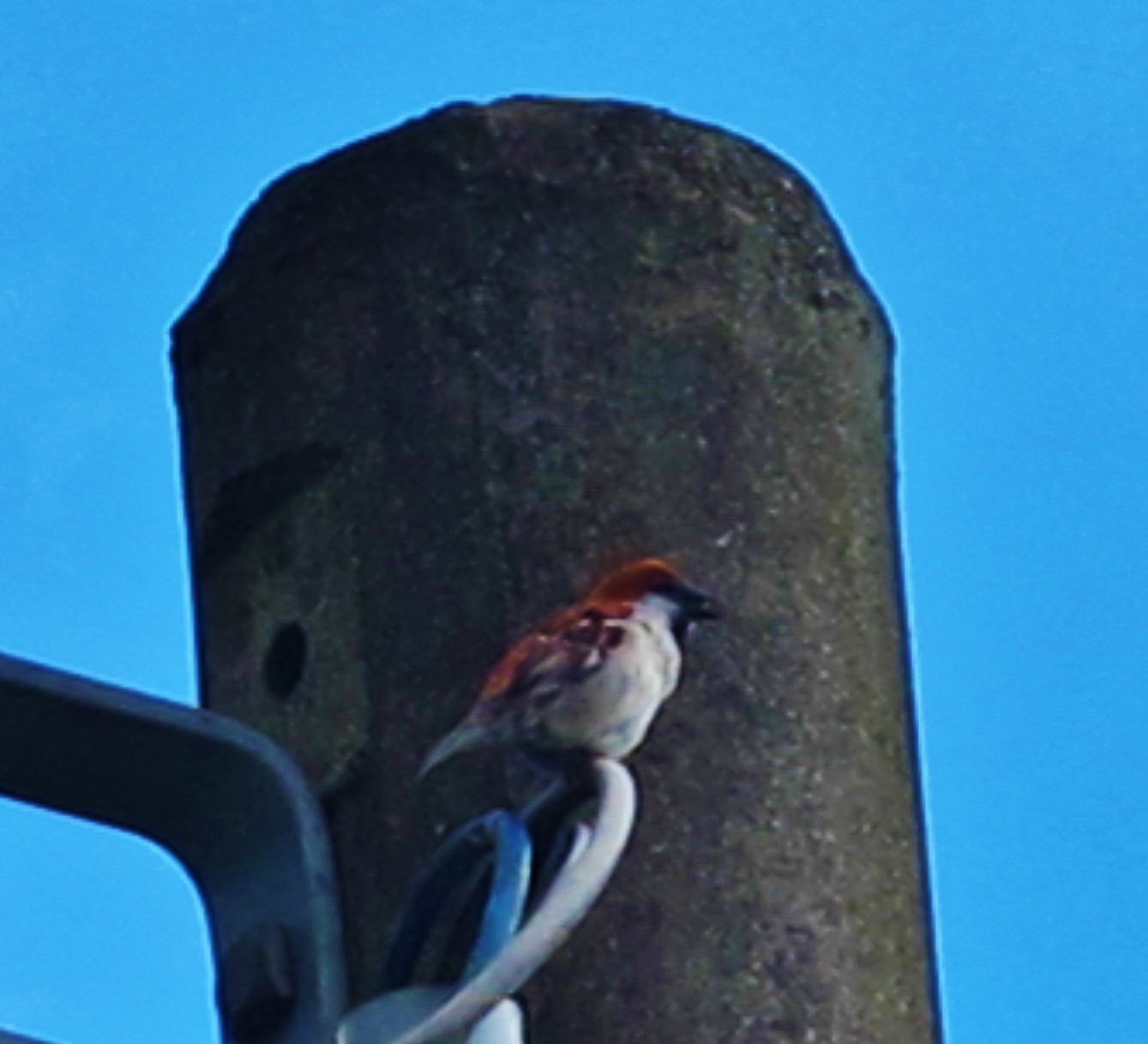
I made a very early start from Kaohsiung on Saturday, and by about 8.30am I was in the village of Xiding. At Km 55.1, a loud chirping made me stop the scooter, and there it was: a fine male Russet Sparrow, singing its heart out on a telephone pole right next to Highway 18. It was a beautiful bird, and I spent some time enjoying it. There was no sign of a female, and no sign of any further Russet Sparrows in Xiding or nearby villages – this is a scarce bird indeed, and one I’d just seen in fine style.

Male Russet Sparrow, Xiding village, May 17th.

Male Russet Sparrow, Xiding village, May 17th.

Male Russet Sparrow, Xiding village, May 17th.

Male Russet Sparrow, Xiding village, May 17th.

I didn’t get to the Tataka visitor center area until about 11.00am, and bird activity was very low, with little of note seen apart from some of the commonest high-altitude birds (White-whiskered Laughingthrush, Collared Bush Robin, Taiwan Fulvetta and Spotted Nutcracker).

I stayed overnight in Chiayi City, and the next day made an early start – although I didn’t make it to the high mountains by first light, as it’s about a two-hour drive from Chiayi to Tataka and I just couldn’t face getting up at 3.30am. I stopped here and there along the way, seeing Striated Prinia in several places, the Russet Sparrow again, and a pair of Taiwan Whistling-Thrushes beside the road at Km 82.

Another beautiful view on the way up to Alishan. It's a nice drive if you can somehow avoid the tour buses.

Another beautiful view on the way up to Alishan. It’s a nice drive if you can somehow avoid getting stuck behind the legions of tour buses.

Things started getting interesting at Km 101, where there was a pair of Vinaceous Rosefinches beside the road. I went on to see a total of 6 of these beautiful birds during the morning. Today, I drove past Tataka, where Highway 18 becomes Highway 21, and continued to Km 141.6, where there is a lone and obvious dead tree to the left of the road. Nearly opposite the tree, on the right, a Taiwan Bush-Warbler was singing loudly very close to the road. I waited and waited, just staring at the grass and bushes, until the slightest of movements gave away the bird’s location and I was able to enjoy awesome close views. Birders often have to rely on tapes to lure this excessively skulking bird into the open, but all I needed today was a stroke of luck (thankfully, because I don’t use tapes!).

The dead tree had several easily-viewed Ferruginous Flycatchers, an attractive summer migrant to montane forests in Taiwan which I had only seen once previously.

I returned to Tataka to search unsuccessfully for Golden Parrotbill and Grey-headed Bullfinch, both of which – especially the bullfinch – I’ve seen on numerous occasions here. But not today. Never mind, it gives me a good excuse to return to this lovely area again later in the year.

Today’s birding was to end with a flourish. A few kilometers back down the mountain towards Alishan, there is a small dirt parking lot and a track leading into some tall coniferous trees, on the left hand side of the road as you descend the mountain. I parked and walked along the trail, which at first goes through a rather birdless conifer plantation. After about 10 minutes walking, I had to negotiate a big landslide – passable with care – after which the trail starts following a water pipeline through primary montane forest. The habitat is excellent here and I had the place to myself. This should be an excellent place for a sighting of Mikado Pheasant (although I wasn’t lucky with this species today). I did, however, have really superb views of a Taiwan Wren-Babbler, which showed right out in the open in response to my “pishing” calls, a beautiful bird which the plates in field guides don’t do justice to.

Conifers at the start of the "pipeline trail", an excellent and little-used trail in Yushan National Park that passes through primary montane forest.

Conifers at the start of the “pipeline trail”, an excellent and little-used trail in Yushan National Park that passes through primary montane forest.

Further along, a pair of White-backed Woodpeckers – a Taiwan tick for me – finally showed well. After a couple of kilometers, the trail seemed to end quite spectacularly in a dark and damp cave. Further investigation revealed that it is possible to walk through the cave and out the other side, where presumably the pipeline trail continues. However, you would need a flashlight which I didn’t have, so I reluctantly turned around and returned to the trailhead.

Continuous heavy rain started soon afterwards, so I was forced to cut short my birding for the day and return to Kaohsiung. I was delighted with my two lifers this weekend, and it’s good to get my year list comfortably through the 200 mark before I return to England for 10 days.

Lifers: Russet Sparrow, Taiwan Bush-Warbler (total 1,775). Taiwan tick: White-backed Woodpecker (total 229). Year ticks: Spotted Nutcracker, White-whiskered Laughingthrush, Taiwan Fulvetta, Flamecrest, Vinaceous Rosefinch, Ferruginous Flycatcher, Taiwan Wren-Babbler (total 203).